


Knee Health and Reformer Pilates: A Professional Perspective
The knee joint is one of the most complex and heavily loaded joints in the human body. Formed where the femur, tibia and patella meet, it coordinates countless movements in daily life — from walking and climbing stairs to sports activities and simply sitting down or standing up. This constant use, however, makes the knee prone to wear, inflammation, cartilage damage and ligament problems. For rehabilitation professionals and physiotherapists, the reformer pilates machine becomes a unique tool for knee rehabilitation, offering controlled, low-impact, gradual loading.
To understand the role of reformer pilates in knee health, it helps to look first at the joint's biomechanics and movement patterns. The knee is primarily a hinge joint, but it also allows slight rotational movement. This means that stabilising the joint depends on the quadriceps, hamstrings and gastrocnemius, as well as structures such as the anterior cruciate ligament (ACL), posterior cruciate ligament (PCL) and the medial and lateral menisci. Reformer pilates helps strengthen all of these structures in a balanced way and optimises how they work together.
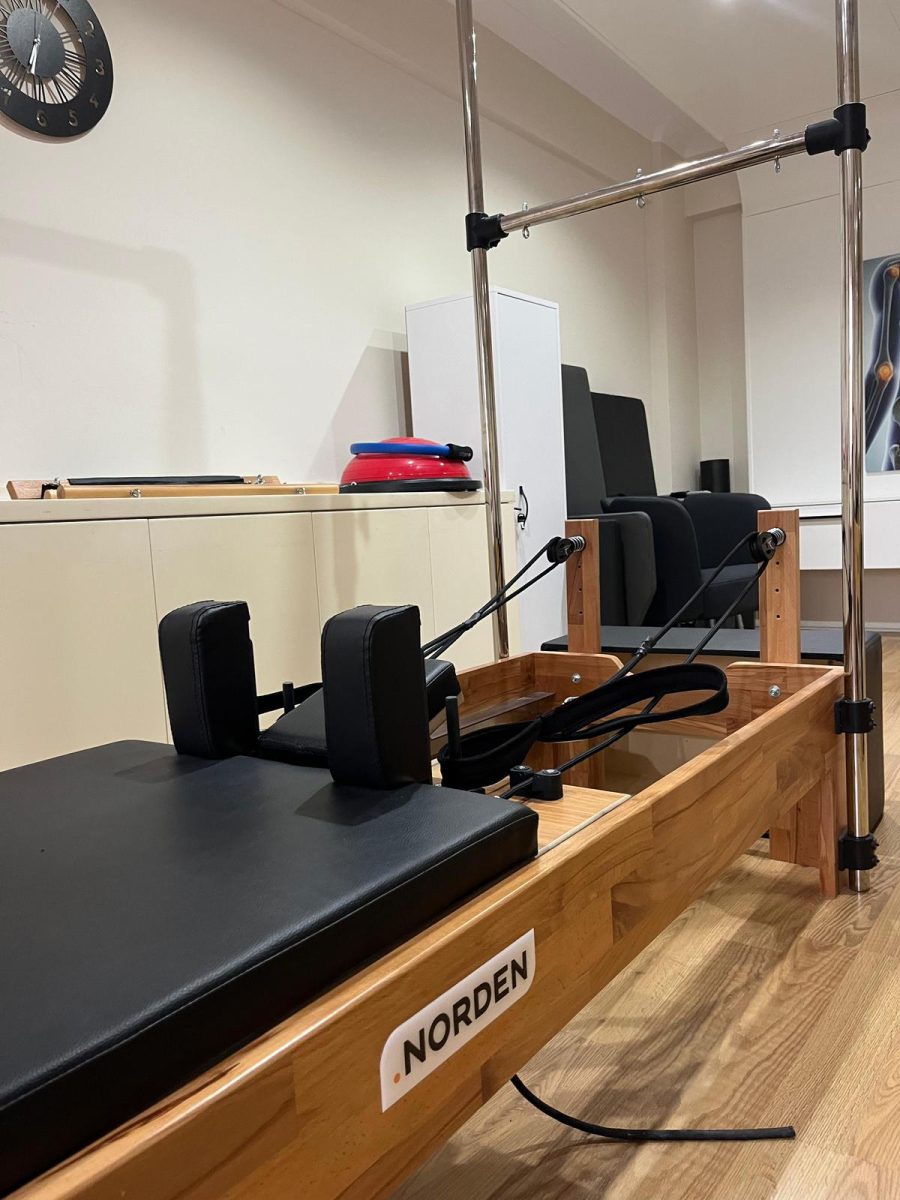
When choosing a reformer for your studio, there are certain technical features worth paying special attention to for clients with knee issues. An 8-wheel carriage system, for example, delivers smooth, quiet movement that prevents sudden jolts and minimises microtrauma to the joint. Likewise, a 4-position footbar lets you work at different knee angles, giving clients who feel pain at a particular angle alternative positions to use instead.
Decision Summary: Which Equipment Suits Knee Rehabilitation?
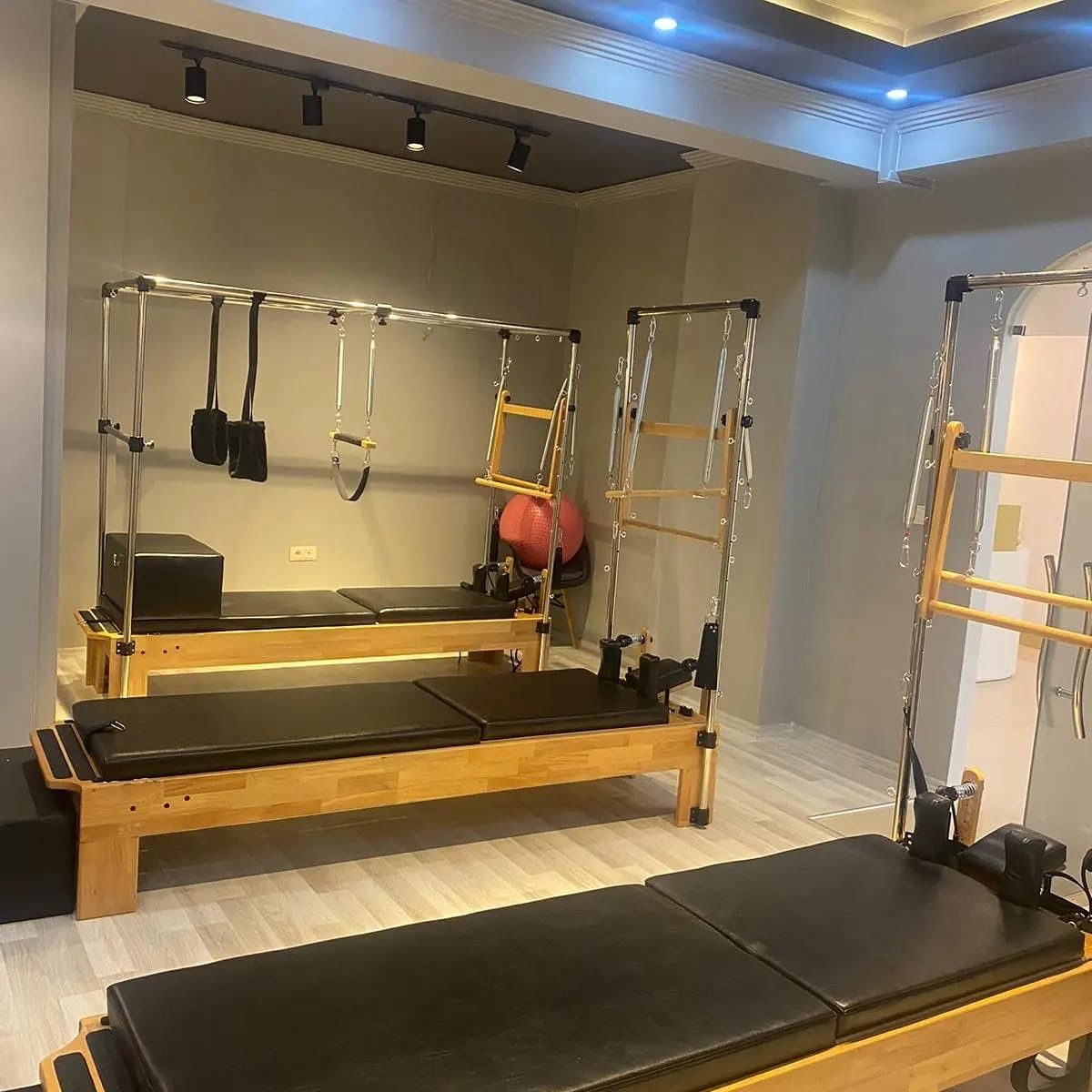
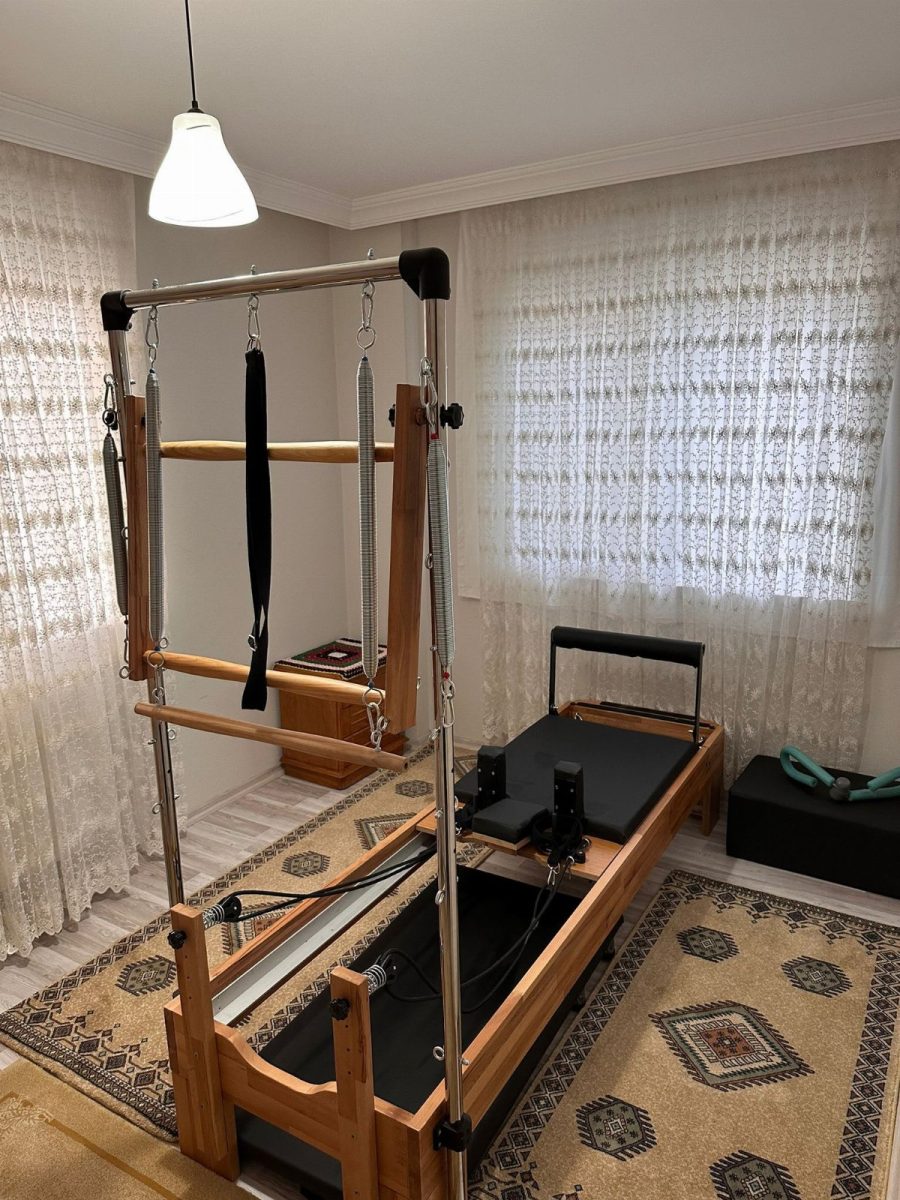
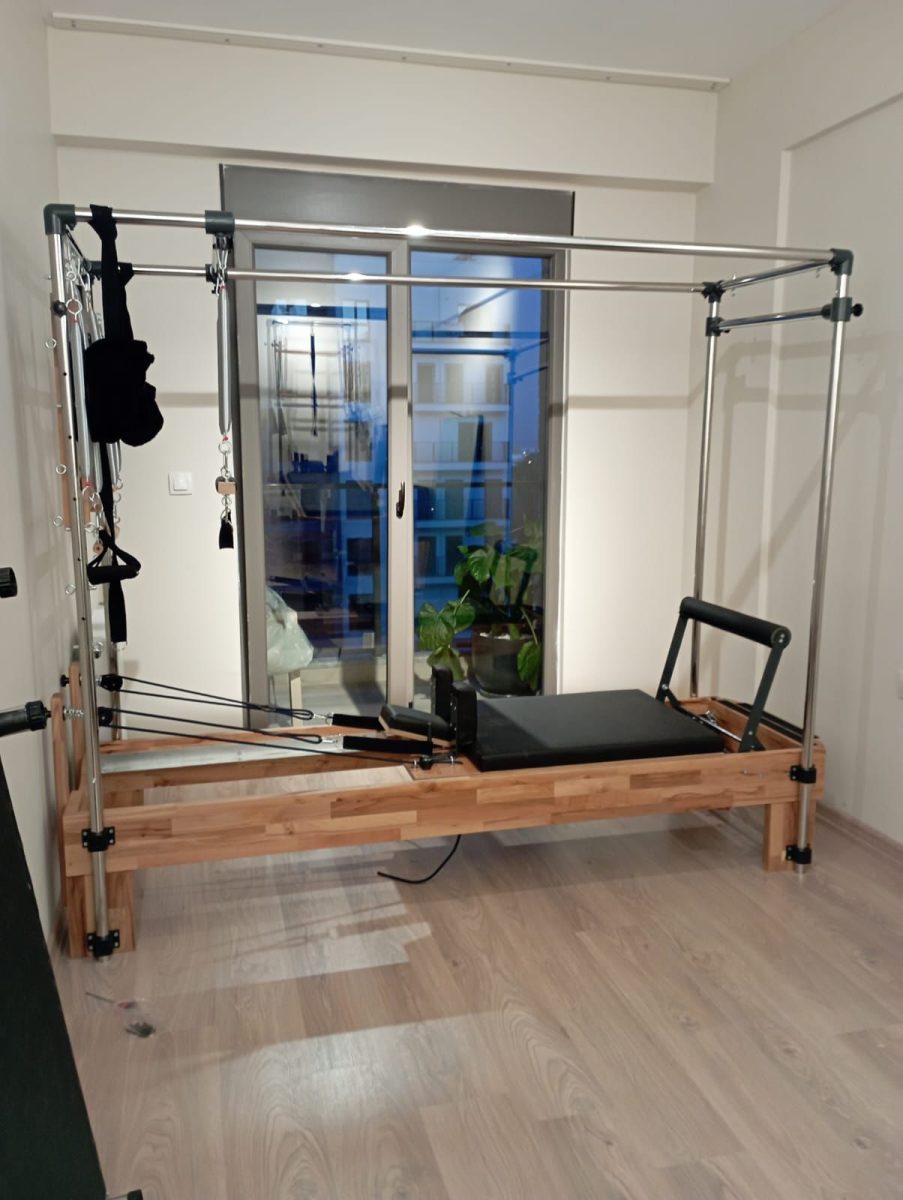
When choosing a pilates reformer for knee rehabilitation, focus on three key criteria: stability, adjustability and range of resistance. The Basic Reformer is often sufficient for home users and lighter rehabilitation needs. However, if you're working in a studio with clients of varying weight and mobility levels, more comprehensive models such as the Tower or Combo Cadillac Reformer offer a wider range of movements and position variations thanks to their tower systems. The Tower Reformer, with its single-sided tower structure, gives you flexibility for wall-supported work and asymmetric-loading knee rehabilitation. The Combo Cadillac Reformer, with its full cage structure, is an ideal platform for trapeze work and traction exercises.
| Feature | Basic Reformer | Tower Reformer | Combo Cadillac Reformer |
|---|---|---|---|
| Price | See the current price on the product page | See the current price on the product page | See the current price on the product page |
| Tower / Cage Structure | None | Single-sided tower | Full cage |
| Spring System | 5 springs (yellow, blue, green, red, black) | 5 springs (yellow, blue, green, red, black) | 5 springs (yellow, blue, green, red, black) |
| Box and Jump Board | Included | Included | Included |
| Suitability for Knee Rehabilitation | Moderate (basic movements) | High (tower-assisted) | Very High (all angles and positions) |
| Equipment Weight | 250 kg (volumetric) | 250 kg (volumetric) | 250 kg (volumetric) |
| Footbar Adjustment | 4 positions | 4 positions | 4 positions |
| Upholstery Quality | Antibacterial, first-grade faux leather | Antibacterial, first-grade faux leather | Antibacterial, first-grade faux leather |
Causes of Knee Pain and Reformer Pilates Intervention Strategies
Knee pain can stem from numerous pathological and mechanical causes. Osteoarthritis, meniscus tears, patellofemoral pain syndrome, anterior knee pain, ligament injuries and tendinitis are among the most common. Each condition has its own biomechanical profile, and the exercise protocols you apply with a pilates reformer should be tailored accordingly.
Using the Reformer for Osteoarthritis and Cartilage Wear
Osteoarthritis results from degeneration of the knee cartilage. In these clients, high-impact exercise can place excessive pressure on the joint and increase inflammation. Reformer pilates offers a horizontal-plane form of exercise that partially removes body weight from the equation. Leg-press variations performed on the footbar, in particular, strengthen the quadriceps and glutes while avoiding vertical loading on the knee joint. Starting with lighter springs such as yellow and blue, you can progress gradually to green and red. This progression builds strength while protecting the joint surfaces.
You can also use the tower system available on the Tower Reformer to work the legs upward towards the ceiling in a supine position. In this position, the effect of gravity is reversed and pressure on the knee joint is minimised. This type of work is especially valuable for older clients or those with advanced osteoarthritis.
Patellofemoral Pain Syndrome and Patellar Tracking Issues
Patellofemoral pain syndrome occurs when the patella fails to glide smoothly within its groove on the femur. This is usually linked to weakness in the vastus medialis obliquus (VMO), hypertonicity of the vastus lateralis, or insufficient hip abductor strength. Reformer pilates allows the VMO to be isolated and trained specifically. Short footwork series and single-leg press movements help optimise activation of this muscle.
You can also strengthen the hip abductors and external rotators using strap work. As hip stability improves, lateral forces on the patella decrease and knee pain eases. If you're using the Combo Cadillac Reformer, you can combine this with roll-down bar work on the tower to train the entire kinetic chain simultaneously.
Rehabilitation After ACL Reconstruction
Rehabilitation after anterior cruciate ligament (ACL) reconstruction usually takes 6–9 months, during which proprioception, muscle strength and movement control all need to be rebuilt. The pilates reformer is one of the most effective tools you can use during this process. In the early phase, closed-chain exercises are preferred. Light press movements on the footbar, for instance, support coordinated work across the foot-ankle-knee-hip chain and minimise shear forces on the joint.
In later stages, single-leg press and single-leg strap work can increase proprioceptive feedback. The spring resistance system on the reformer gives the client real-time feedback and improves motor control. Balanced work on the jump board can also apply controlled stress to the healing ACL tissue, supporting the remodelling process.
Core Reformer Pilates Exercises Used in Knee Rehabilitation
There are dozens of reformer exercises you can use in knee rehabilitation. Each one, however, serves a specific purpose and targets a specific muscle group. Below is a biomechanical breakdown of the most common and effective ones.
The Footwork Series: Fundamental and Highly Effective
Footwork is one of the cornerstones of reformer pilates and is used at every stage of knee rehabilitation. This series targets the quadriceps, hamstrings, gastrocnemius and tibialis anterior through different foot positions. Variations such as parallel, Pilates V, wide stance and heels each create different muscle activation patterns.
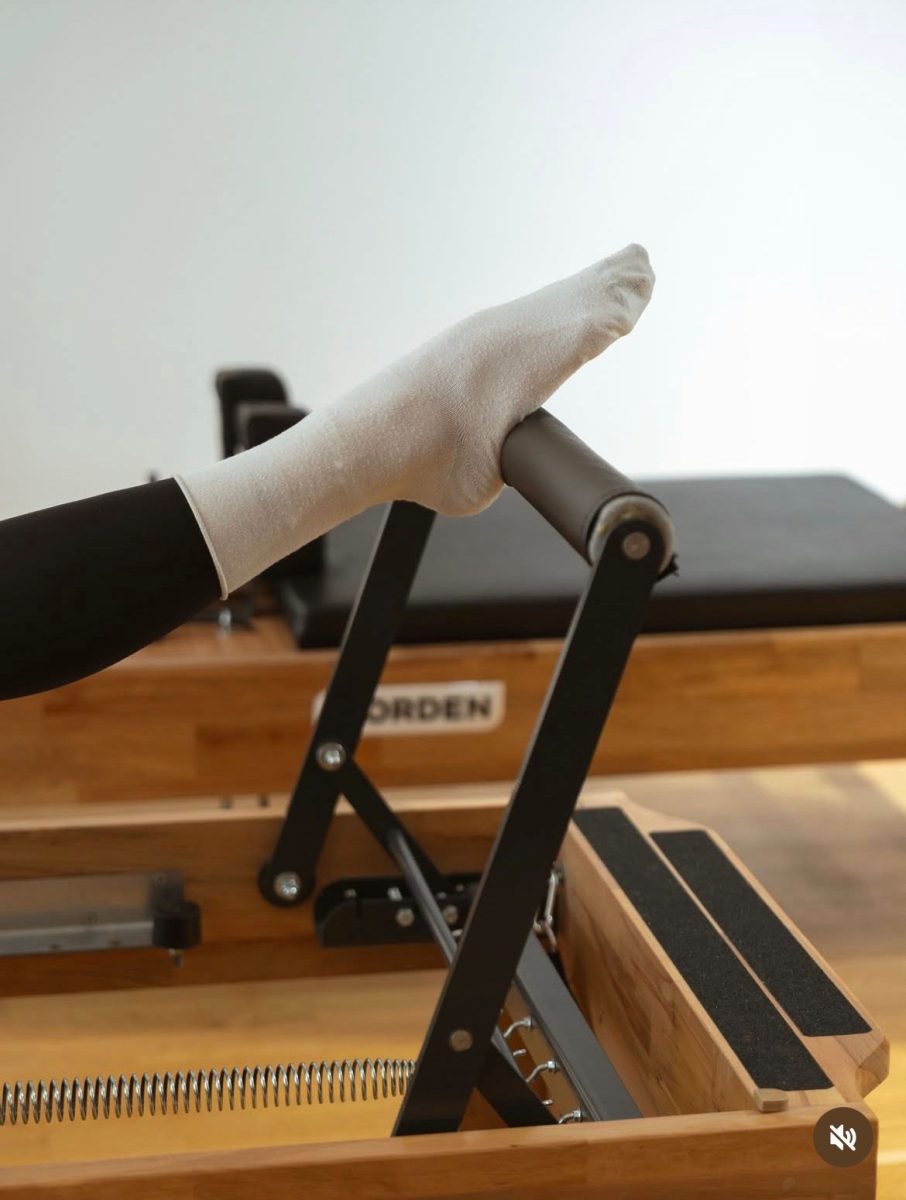
- Parallel Footwork: Feet are hip-width apart and parallel. This position activates all heads of the quadriceps evenly and distributes load across the patellofemoral joint uniformly.
- Pilates V Position: Heels together, toes turned out. This position engages the vastus medialis obliquus (VMO) more and improves patellar stabilisation.
- Wide Stance: Feet positioned at the edges of the footbar. This variation additionally works the hip adductors and gluteus medius, indirectly contributing to knee stability.
- Heels: Only the heels rest on the footbar. This position activates the hamstrings more and strengthens the posterior chain.
In the footwork series, you might start with two yellow springs for sets of 10–15 reps. If the client can complete the movement pain-free, you can gradually add a blue spring to increase resistance. The key is maintaining movement quality and avoiding sudden loading on the knee joint.
Lower-Limb Strengthening with Straps
Straps are used on the reformer to isolate and train the legs. They are ideal in knee rehabilitation for targeting the hip flexors, abductors, adductors and hamstrings. In a supine position, with one or both legs in the straps, you can perform movements such as leg circles, frogs and scissors.
Leg Circles: This movement uses the full range of motion of the hip joint while also engaging core stabilisation. The knee stays fixed while controlled rotation happens at the hip, enhancing proprioceptive feedback.
Frogs: The legs are pressed out from a bent position and drawn back in. This strengthens the quadriceps and gluteus maximus while improving flexion-extension coordination at the knee.
Single Leg Stretch: One leg is in the straps while the other is anchored on the footbar. This asymmetric loading allows the weaker side to be strengthened, addressing imbalances between the two legs.
Integrating Core and Posture with the Short Box Series
The short box is an accessory used for exercises performed in a seated position on the reformer. The Box and jump board are included with all pilates reformer models, so there's no extra cost. Exercises on the box build core stabilisation while keeping the knee in a neutral position, increasing postural awareness.
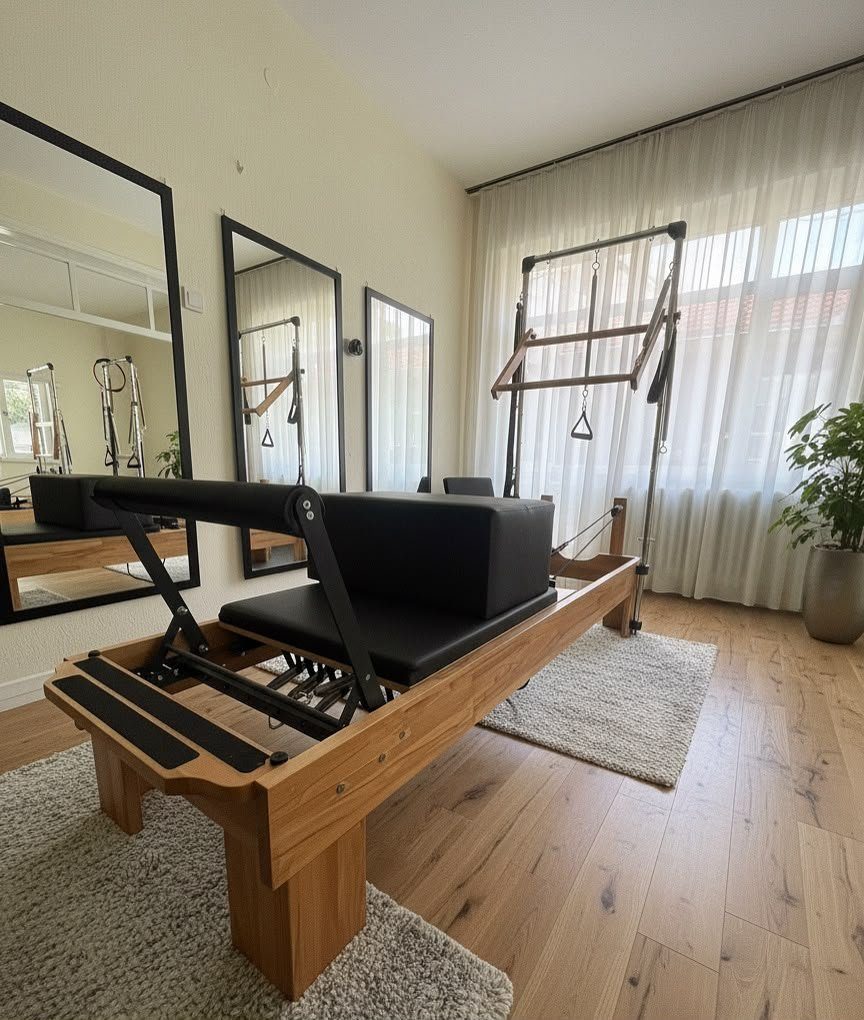
Variations such as round back, flat back, side-to-side and twist work the entire trunk. Although these exercises don't target the knee directly, improved trunk stability optimises loading patterns through the lower limb and reduces compensatory movement at the knee.
Equipment Choice and Technical Specifications: Key Factors for Knee Health
When choosing a Cadillac reformer for knee rehabilitation purposes, there are many technical details worth considering. These directly affect both client safety and exercise effectiveness.
Material Quality and Durability
All Norden Reformer models are built from first-grade solid beech wood. Thanks to its high density and bending resistance, beech holds its shape even with heavier clients and heavy daily use. It's finished with 4 coats of a special matte varnish, which protects against sweat and moisture. In knee rehabilitation — especially after hydrotherapy sessions or with clients who sweat heavily — this type of protective finish matters.
The heavy frame construction keeps the machine from rocking on the floor. A weight of 250 kg (volumetric) ensures the machine doesn't shift during movement, giving clients a secure working environment. This stability is a crucial safety factor, particularly for clients who may struggle with balance during knee rehabilitation.
Mechanical System: Smooth, Quiet Movement
The quality of the carriage's movement directly affects the effectiveness of the exercise. Norden Reformer's 8-wheel system (16 bearings) delivers an exceptionally smooth, quiet motion. This matters especially in knee rehabilitation, since sudden jolts and interruptions can cause microtrauma to the joint. Smooth movement ensures even loading through the eccentric and concentric phases of each exercise and optimises proprioceptive feedback.
The 4-position footbar also lets you set the ideal working angle for clients of different heights. A shorter client and a taller client will have different knee flexion angles. By adjusting the footbar to the right position, you can achieve the optimal biomechanical setup for each individual.
Tower and Cage Systems: For Advanced Rehabilitation
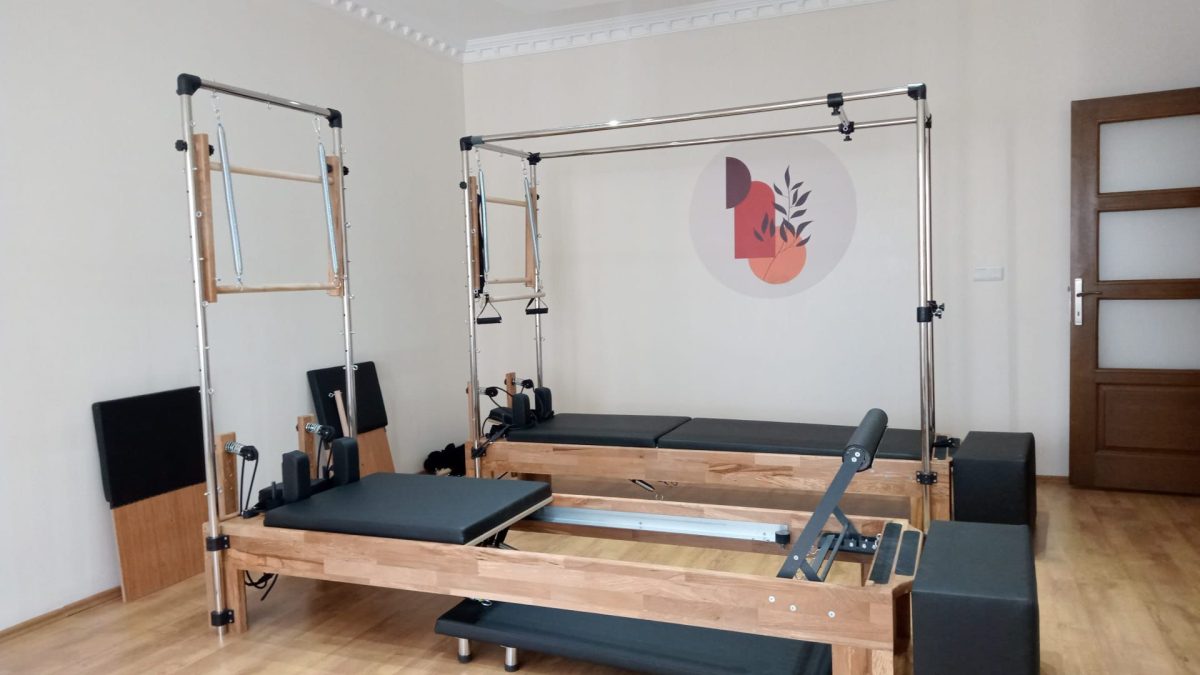
The Tower Reformer and Combo Cadillac Reformer models offer additional tower and cage structures, expanding the range of possible movements. The tower is built with 304 chrome steel construction, offering maximum resistance to bending. This material choice is particularly important for safety when working with heavier clients and during traction exercises.
The Tower Reformer, with its single-sided tower, is ideal for wall-supported work. In knee rehabilitation, traction exercises performed in a supine position with the legs extended towards the ceiling can increase joint space and relieve pain. The Combo Cadillac Reformer, with its full cage structure, offers a much broader exercise range — including trapeze work, trunk mobilisation with the roll-down bar, and core strengthening with the push-through bar.
Scientific Background: Research on Reformer Pilates and Knee Health
Numerous studies have examined the effects of reformer pilates on knee health, reporting positive outcomes for both pain reduction and functional improvement.
Osteoarthritis and Pain Management
A study published in the Journal of Bodywork and Movement Therapies found that a 12-week reformer pilates programme reduced pain scores by 40% in patients with osteoarthritis. The same study also found significant improvements in Western Ontario and McMaster Universities Osteoarthritis Index (WOMAC) scores. These results suggest that while reformer pilates doesn't stop cartilage wear, its low-impact, controlled loading principle provides noticeable symptom relief.
Proprioception and Balance Improvement
Another study found a 30% improvement in proprioceptive ability among people practising reformer pilates. This improvement is a key factor in preventing knee injuries. Better proprioception helps the joint sense its position more accurately and speeds up protective reflexes during sudden movements.
Muscle Strength and Functional Mobility
A meta-analysis published in the European Journal of Physical and Rehabilitation Medicine found that pilates exercises increased quadriceps and hamstring strength by 25–35%. This improvement particularly reduces fall risk in older populations and helps preserve independence in daily activities.
Practical Advice for Studio Owners: Equipment Management
If you run a pilates studio or use a reformer in a physiotherapy clinic, you need a professional approach to equipment management and client safety.
Equipment Maintenance and Hygiene
All Norden Reformer equipment uses antibacterial, first-grade faux leather upholstery. Still, regular cleaning is essential with heavy use. Wipe the upholstery with a damp cloth after every session, and do a general clean with disinfectant spray once a week. It's also a good idea to check the bearings and rails monthly, applying lubrication when needed to keep them running smoothly.
Client Assessment and Protocol Design
When you take on a new client with a knee issue, start with a thorough assessment. This should include:
- Medical History: Previous surgeries, current diagnoses, medications in use.
- Pain Profile: Location and severity of pain, triggering factors, impact on daily life.
- Range of Motion: Passive and active knee flexion-extension angles, end-range resistance.
- Muscle Strength: Manual muscle testing of the quadriceps, hamstrings and hip muscles.
- Functional Tests: Sit-to-stand test, stair-climbing ability, single-leg balance.
Based on this assessment, build a personalised exercise protocol, including starting resistance, rep count, movement speed, rest periods and a progression plan.
Logistics and Delivery
When sourcing new equipment, it's worth understanding the logistics involved. Norden Reformer builds each machine within 9 business days. Delivery, taxes and duties are included in the price, and machines ship fully assembled — arriving ready to use rather than as a flat-pack kit requiring specialist assembly.
The carriage and frame arrive already assembled. Only the tower section needs to be fitted and secured, a simple task you can complete yourself with the help of video instructions — no technician required, so you can start using your equipment quickly.
Advantages and Disadvantages: Reformer Pilates in Knee Rehabilitation
Like any exercise modality, reformer pilates has its own advantages and limitations in knee rehabilitation. Understanding these helps you set realistic expectations for clients and fine-tune the treatment plan.
Advantages
- Low-Impact Exercise: Horizontal-plane work reduces the effect of body weight and minimises load on the knee joint.
- Controlled Resistance: The spring system can be adjusted to the client's individual strength, allowing gradual progression.
- Proprioceptive Training: The moving carriage requires constant balance adjustments, increasing joint awareness.
- Versatile Movement: Footwork, straps, box and tower systems allow hundreds of different exercise variations.
Core Integration: Every movement requires core stabilisation, strengthening the entire kinetic chain. Personalisation: Different spring colours, footbar positions and tower setups allow a custom protocol for every client. Long-Term Sustainability: Reformer pilates offers more than short-term pain relief — over time it corrects muscle imbalance and posture, helping prevent chronic problems.
Disadvantages and Limitations
- Cost: Investing in a professional pilates reformer requires a significant upfront outlay — see the current price on the product page for each model. That said, with a 2-year parts warranty and durability built for heavy use, this investment pays for itself over time.
- Learning Curve: Reformer pilates requires correct technique and cueing. Untrained instructors can give clients incorrect guidance, increasing injury risk. Working with a certified instructor — or completing comprehensive pilates training yourself — is essential.
- Caution During Acute Inflammation: If the knee joint shows acute inflammation, swelling or heat, exercise shouldn't begin right away. Medical treatment and rest should come first, with reformer exercises introduced once the condition reaches the subacute phase.
- Equipment Dependency: Reformer pilates requires equipment. For clients who want to train at home, sourcing the equipment and finding the space can be a challenge — though Foldable Reformer models largely solve this problem.
- May Not Be Sufficient Alone: Knee rehabilitation sometimes requires additional modalities such as manual therapy, mobilisation techniques and functional training. Reformer pilates is part of this process, but it isn't always enough on its own.
Progression Strategies and Long-Term Planning for Knee Rehabilitation
Knee rehabilitation isn't a linear process. Some periods bring rapid improvement, while others involve plateaus or temporary flare-ups of pain. For this reason, your progression plan needs to be flexible and adaptive.
Phase 1: Pain Control and Restoring Range of Motion
The goal in the first phase is to reduce pain and regain lost range of motion. Very light resistance is used here. Start with two yellow springs and work within a small range of motion. In the footwork series, you might limit knee flexion to 0–45 degrees, using only around 50% of the full range. For strap work, passive mobilisation and gentle active-assisted movements are preferred.
During this phase, keep sessions short — 10 to 15 minutes a day — and monitor the client's pain levels closely throughout. If pain increases after a movement, reduce the resistance further or narrow the range of motion.
Phase 2: Building Muscle Strength and Endurance
In the second phase, once pain is under control and range of motion has returned to normal, the focus shifts to muscle strength. Resistance is increased by adding a blue or green spring. The footwork series moves to full range of motion, and reps increase to 15–20.
More challenging exercises such as single-leg press and side-lying leg work are also added to the programme. These create asymmetric loading that helps strengthen the weaker side. More advanced core exercises on the box, such as pike and teaser, can also be introduced at this stage.
Phase 3: Functional Training and Performance Optimisation
In the third and final phase, functional movements suited to the client's daily life and sporting goals are integrated. Higher resistances, such as red and black springs, can be used here. Plyometric exercises on the jump board prepare the joint for real-world stress.
If you're using the Combo Cadillac Reformer, jumping exercises on the trapeze can be used to build explosive power. These exercises are especially important for clients looking to return to sport.
Financial Planning and Return on Investment for Studio Owners
If you're planning to open a pilates studio or physiotherapy clinic, it's worth thinking through the financial side of your equipment investment too. Reformer pilates equipment carries a high upfront cost, but it's an investment that pays off well over the long run.
Cost-Benefit Analysis
For the current price of the Basic Reformer, see the product page. Suppose you can run 20 sessions a week (60 minutes each) using this equipment. At a typical session rate, your monthly revenue can add up quickly, allowing you to recoup the equipment cost within a matter of months. With the Tower Reformer or Combo Cadillac Reformer, offering a broader range of movement options can support premium session pricing, shortening the payback period even further.
Flexible payment options may also be available on request, which can help manage cash flow — a useful advantage for businesses working with a tight start-up budget.
Logistics Costs and Delivery Planning
Delivery, taxes and duties are included in the price, so there are no separate shipping costs to budget for, and your total investment is clear from the outset.
The equipment is delivered fully assembled to your door. The carriage arrives ready-built, so all that's needed is fitting the tower section. With the help of video instructions, this typically takes around 30–45 minutes.
Frequently Asked Questions: Using Reformer Pilates for the Knee
1. Can someone with knee pain do reformer pilates?
Yes, people with knee pain can do reformer pilates. However, a medical assessment should come first to rule out serious structural issues (such as a full-thickness meniscus tear or advanced osteoarthritis). Because reformer pilates is low-impact and controlled, it can be safely applied to most knee conditions. The instructor needs to understand the client's pain profile and modify exercises accordingly.
2. Does reformer pilates regenerate knee cartilage?
No, reformer pilates doesn't regenerate cartilage. Cartilage tissue has limited regenerative capacity and doesn't fully heal once damaged. However, reformer pilates can slow further cartilage wear and reduce load on the joint by strengthening the surrounding muscles. It also brings meaningful improvements in pain management and functional mobility.
3. When can reformer pilates start after knee surgery?
The timing depends on the type of surgery and your surgeon's recommendations. After arthroscopic meniscus repair, for example, light reformer exercises can often begin within 4–6 weeks. After ACL reconstruction, this may extend to 8–12 weeks. In every case, you need surgeon approval and should start under the supervision of a physiotherapist or qualified instructor.
4. Which reformer model is best suited for knee rehabilitation?
The best model depends on the client's needs and intended use. For home use, a Basic Reformer may be enough. But if you're working in a professional studio with clients who have various knee conditions, the Tower Reformer or Combo Cadillac Reformer offers a wider range of movement. Tower and cage systems are needed for traction exercises and advanced rehabilitation protocols.
5. What should I do if knee pain increases during reformer pilates?
If knee pain increases during reformer pilates, stop the movement immediately. Increased pain can result from incorrect technique, excessive resistance, or too large a range of motion. Start by reducing resistance, narrowing the range of motion and reviewing technique. If the pain persists, seek a medical evaluation. Mild discomfort can be normal, but sharp or severe pain may indicate tissue damage.
6. Does reformer pilates strengthen just the knee, or the whole leg?
Reformer pilates isn't an isolated knee exercise. Every movement engages the entire kinetic chain. The footwork series works the quadriceps, hamstrings, glutes and gastrocnemius together. Strap exercises activate the hip flexors, abductors and core. This holistic approach improves not just the knee joint but the entire lower limb and posture, resulting in a more functional, balanced body.
7. Can someone with a knee replacement do reformer pilates?
Yes, reformer pilates can be done after total knee replacement surgery. However, you should wait at least 3–6 months for initial healing and get your surgeon's approval first. Reformer pilates is an excellent tool for maintaining range of motion, building muscle strength and improving functional mobility after a knee replacement. During sessions, avoid excessive rotational movements and increase resistance gradually.
Conclusion: Sustainable Improvement in Knee Health with Reformer Pilates
Knee health directly affects quality of life. Pain, restricted movement and functional limitations take a toll on daily activities, social life and psychological wellbeing. Reformer pilates offers more than just an exercise modality here — it provides a comprehensive rehabilitation and prevention strategy.
Regular, systematic work with a pilates reformer optimises knee joint biomechanics, improves proprioception, corrects muscle imbalances and reduces pain. That said, choosing the right equipment, getting professional guidance, and following personalised protocols are all critical to the process.
Norden Reformer's Basic Reformer, Tower Reformer and Combo Cadillac Reformer models meet all the technical specifications and quality standards needed for knee rehabilitation. First-grade solid beech wood, an 8-wheel carriage system, a 5-spring resistance system, a 4-position footbar and 304 chrome steel tower construction guarantee both safety and effectiveness. A 2-year parts warranty and durability built for heavy use provide the assurance needed for a long-term investment.
If you're a physiotherapist, pilates instructor or studio owner working with clients who have knee issues, investing in reformer pilates equipment is one of the most effective ways to raise the quality of your service and maximise client satisfaction. Check out our page on reformer pilates machine models for more detail, and choose the equipment that best suits your needs.
Keep in mind that knee health isn't just about the joint itself. Posture, core stabilisation, hip strength and proprioception all need to be considered together as a whole. Reformer pilates is one of the most effective tools for putting this holistic approach into practice. With the right methods, patience and professional guidance, it's entirely possible to move past knee pain and lead an active, healthy life.


