


Equipment-based Pilates is an exercise and rehabilitation method that combines the control, breath and core principles developed by Joseph Pilates with specialised spring-resistance equipment. If you want the shortest possible answer to what is equipment-based Pilates, it's a system where your body works not only against gravity but also against adjustable spring resistance, with every movement able to be made harder or easier by the equipment itself. While it shares the same philosophy as mat Pilates, the Pilates equipment used makes load management, alignment feedback and personalised programming far more precise. In this guide, we'll cover every layer of equipment-based Pilates with a physiotherapist's biomechanical perspective and an equipment engineer's knowledge of materials. If you're thinking about setting up a studio or getting equipment for your home, start by reviewing the technical comparison table below, where you can see Norden Reformer reformer models side by side.
| Technical Specification | Basic Reformer | Tower Reformer | Combo Cadillac Reformer |
|---|---|---|---|
| Tower / Cage Structure | No tower or cage | Tower on one side | Full cage |
| Frame Material | Grade-1 solid beech, 4-coat matte lacquer | Grade-1 solid beech, 4-coat matte lacquer | Grade-1 solid beech, 4-coat matte lacquer |
| Tower Material | Not applicable | 304 chrome steel | 304 chrome steel |
| Carriage Mechanism | 8 wheels, 16 bearings | 8 wheels, 16 bearings | 8 wheels, 16 bearings |
| Footbar / Gearbar | 4 positions / 3 positions + stopper | 4 positions / 3 positions + stopper | 4 positions / 3 positions + stopper |
| Spring System | 5 springs (yellow, blue, green, red, black) | 5 springs (yellow, blue, green, red, black) | 5 springs (yellow, blue, green, red, black) |
| Box and Jump Board | Included | Included | Included |
| Frame Dimensions | 69×240×40 cm | 69×240×40 cm | 69×240×40 cm |
| Tower Dimensions | None | 79×190 cm | 79×190 cm |
| Price | See the current price on the product page | See the current price on the product page | See the current price on the product page |
| Warranty | 2-year parts warranty | 2-year parts warranty | 2-year parts warranty |
Decision Guide: Which Model Is Right for You?
After reading the table, your first question is probably which model matches your needs. This decision depends on who will use the equipment, the space available, and the exercise repertoire you want to offer. The two scenarios below are designed to speed up that decision.
For Physiotherapists and Instructors Setting Up a New Studio
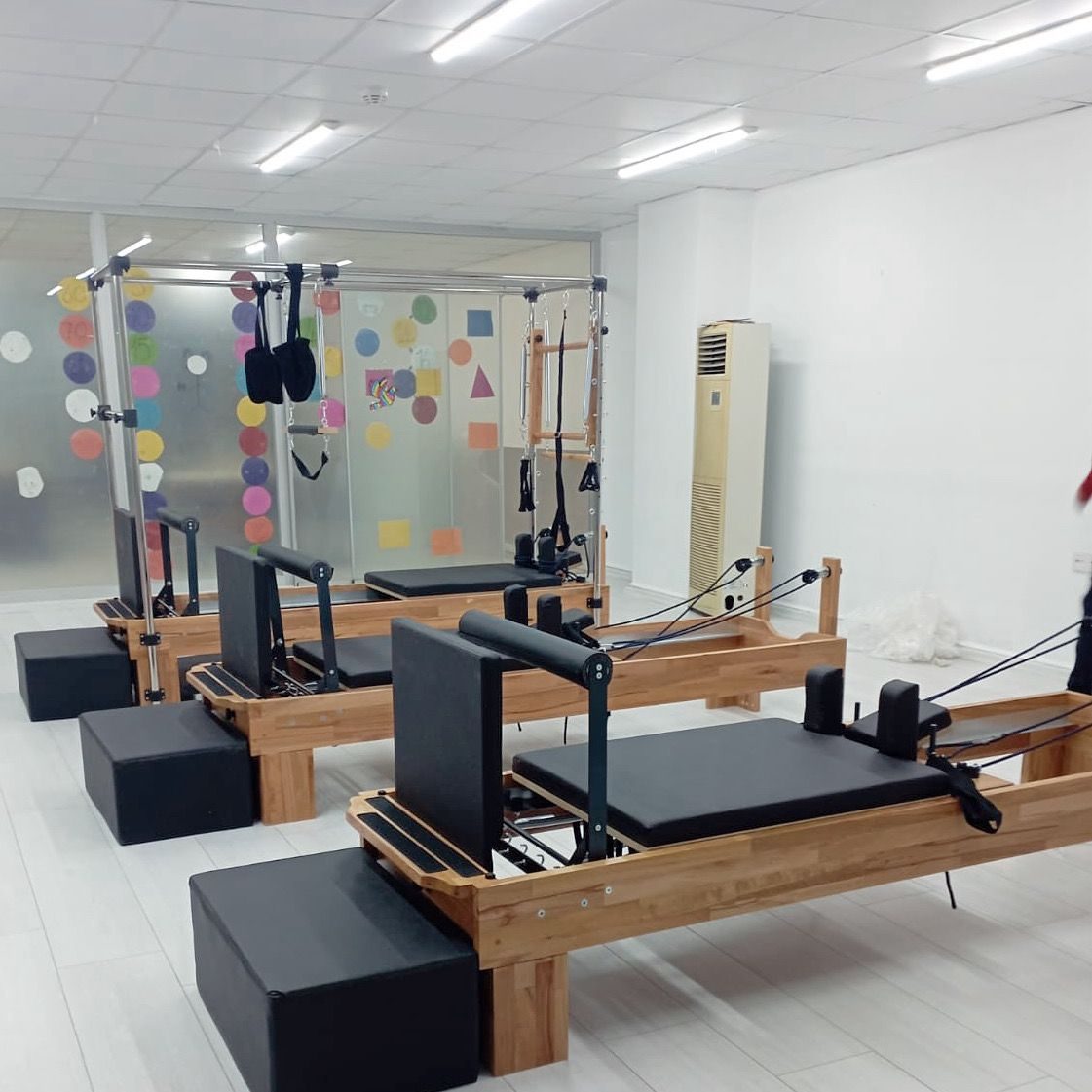
If your client base includes postural issues, lower back and neck problems, or post-surgical rehabilitation cases, the extra springs and bars offered by a tower or cage system give you serious clinical flexibility. The Tower Reformer, with its tower positioned on one side, offers additional resistance options for standing, kneeling and lying positions on the reformer while keeping a compact footprint. The Combo Cadillac Reformer, with its full cage structure, provides access to the complete range of straps, bars and spring combinations — a real difference-maker for complex rehab cases and advanced repertoire. When building your studio's first equipment list, pairing one Cadillac with several Tower or Basic units balances both budget and programme variety. If you'd like to plan this step by step, our guide on the equipment list and start-up costs for opening a Pilates studio will walk you through it.
For Individuals Who Want to Train Regularly at Home
For home use, the priorities are usually space, frequency of use and training goals. The Basic Reformer, which lets you perform the vast majority of the reformer repertoire without a tower or cage, is a strong starting point for home users thanks to its sturdy frame and complete set contents. If your space is limited and you want to put the equipment away when not in use, we recommend considering the home-use Foldable Reformer. Keep in mind that the Basic and foldable models don't include a tower or cage, but as with all models, the box and jump board are included in the set.
What Is Equipment-Based Pilates? Core Principles and How It Works
To understand equipment-based Pilates, it helps to look at where the method was born. During the First World War, Joseph Pilates attached springs to the beds of patients with limited mobility so they could keep their muscles active. This simple idea gradually evolved into the reformer, Cadillac and other Pilates equipment we know today. In other words, equipment-based Pilates is, by origin, a rehabilitation tool — and that DNA still shapes how it's used in modern studios.
The Two-Way Role of Spring Resistance
What sets equipment-based Pilates apart from other forms of resistance training is that the spring works in two directions. A dumbbell only creates load in the direction of gravity, whereas a spring generates force both as it stretches and as it shortens. This means a movement requires concentric control during the push phase and eccentric control during the return. When you control the carriage carefully on the way back, instead of letting the spring pull you, you work your muscles in the most efficient way possible. This need for control is the physical embodiment of two of Pilates' core principles: concentration and flow.
Resistance That Both Assists and Challenges
Springs don't always make a movement harder. In some exercises, the spring supports part of the body, making the movement easier. For example, in certain spinal articulation exercises performed on the cage system, the spring helps the client move their spine vertebra by vertebra. This is what makes equipment-based Pilates a safe, gradually progressive loading platform for people with limited muscle strength, those avoiding movement due to pain, or older adults.
Differences Between Equipment-Based Pilates and Mat Pilates
It wouldn't be accurate to rank mat Pilates and equipment-based Pilates against each other, since both are built on the same principles. However, there are clear differences in load management, feedback mechanisms and the range of exercises available. Knowing these differences helps you guide clients correctly and plan your own training effectively.
| Criterion | Mat Pilates | Equipment-Based Pilates |
|---|---|---|
| Source of Resistance | Body weight and gravity | Adjustable spring resistance and body weight |
| Load Adjustability | Limited, achieved by changing position | Precise adjustment through spring combinations |
| Assisted Movement Option | Almost none | Assisted movement via springs and equipment |
| Alignment Feedback | Mostly through the instructor and self-awareness | Physical reference points from footbar, shoulder rests and carriage |
| Suitability for Rehabilitation | Moderate | High |
| Initial Cost | Low | Requires equipment investment |
Differences in Managing Resistance and Gravity
On the mat, body weight is the only source of resistance. To make a movement easier or harder, you have to shorten or lengthen the lever arm — in other words, change your position. Even a classic "hundred" can place excessive strain on the lower back for a beginner. On a reformer, you can change the number and colour of springs to re-adjust the load on the same movement within seconds. This flexibility makes life much easier for instructors, especially in mixed-level group classes.
Alignment and Proprioceptive Feedback
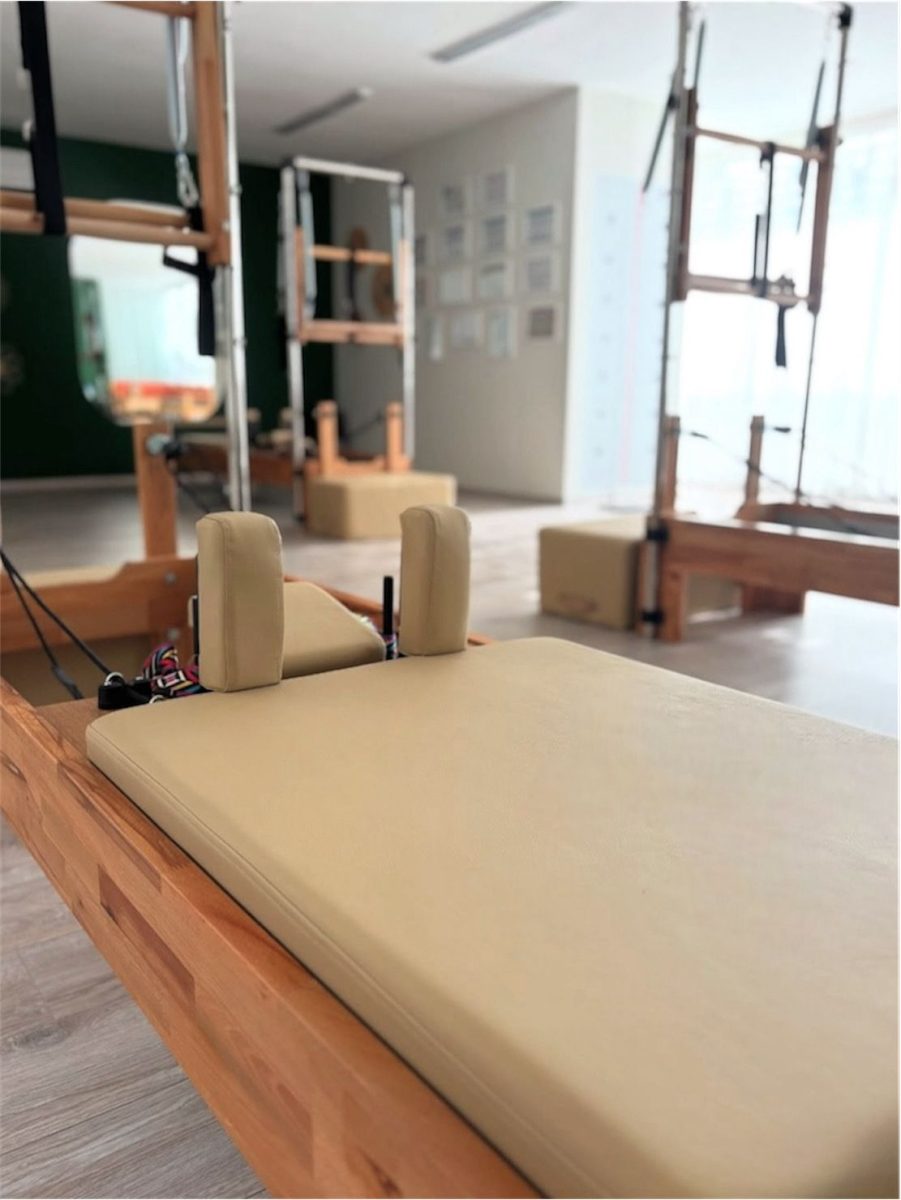
On the mat, sensing the position of your spine and pelvis depends entirely on your own body awareness. With equipment-based Pilates, the head and shoulder rests, footbar and carriage surface provide a constant physical reference point. Feeling that your shoulders are pressing evenly into the shoulder rests, or that your feet are symmetrical on the footbar, lets you instantly notice left-right asymmetries. In clinical practice, this allows corrective work to be carried out in a much more controlled way for clients with scoliosis or one-sided muscle weakness.
Accessibility, Cost and Use Case
Mat Pilates' biggest advantage is accessibility — all you need is a mat and a small amount of space. Equipment-based Pilates requires an equipment investment, but for a studio owner this translates into higher per-session rates and a broader client base. For home users, a well-built reformer is an investment that can last for years and gradually pay for itself compared with ongoing studio fees. In an ideal programme, the two methods complement each other: the awareness built on the mat improves performance on the reformer, and the strength built on the reformer feeds back into mat performance.
The Science Behind It: Biomechanical Foundations of Equipment-Based Pilates
There are solid biomechanical reasons why equipment-based Pilates is so widely used in rehabilitation and performance training. From a physiotherapist's perspective, a reformer is essentially a controlled load-management device.
Closed Kinetic Chain and Eccentric Control
In footwork exercises, where the feet stay fixed on the footbar while the body moves, you get a classic example of closed kinetic chain training. This type of exercise improves joint stability, promotes simultaneous contraction of the muscles around the knee and hip, and reduces shear forces on joint surfaces. For clients recovering from ACL reconstruction or dealing with knee osteoarthritis, footwork on a reformer can start at a much lower load than standing squats and progress gradually by increasing spring resistance. The eccentric control required during the return phase is also extremely valuable for tendon health and the load tolerance of the muscle-tendon unit.
Core Stabilisation and Deep Muscle Activation
Working on a moving carriage requires the body to constantly perform a balancing and stabilising task. This increases activation of deep stabiliser muscles such as the transversus abdominis, multifidus, pelvic floor and diaphragm. Numerous studies on chronic low back pain have shown that Pilates-based exercise programmes can have a positive effect on pain and function. Equipment-based Pilates takes this a step further by allowing the load to be finely tuned to the individual.
Progressive Loading in Rehabilitation
The fundamental rule of tissue healing is to load tissue enough to stimulate it without exceeding its capacity. On a reformer, combinations of five different springs offer an extremely wide load range for applying this principle. Being able to adjust the load even within a single session, based on a client's pain level and tissue tolerance, speeds up clinical decision-making. That's why it's worth reviewing the technical criteria in our guide on choosing a reformer for physiotherapists when selecting the right equipment for your clinic.
Pilates Equipment Used in Equipment-Based Pilates
While the reformer is usually the first thing that comes to mind with equipment-based Pilates, the classical repertoire is actually a family of different pieces of equipment. Each has its own biomechanical purpose, and modern designs can combine several of them into a single unit.
Reformer: The Centrepiece of Equipment-Based Pilates
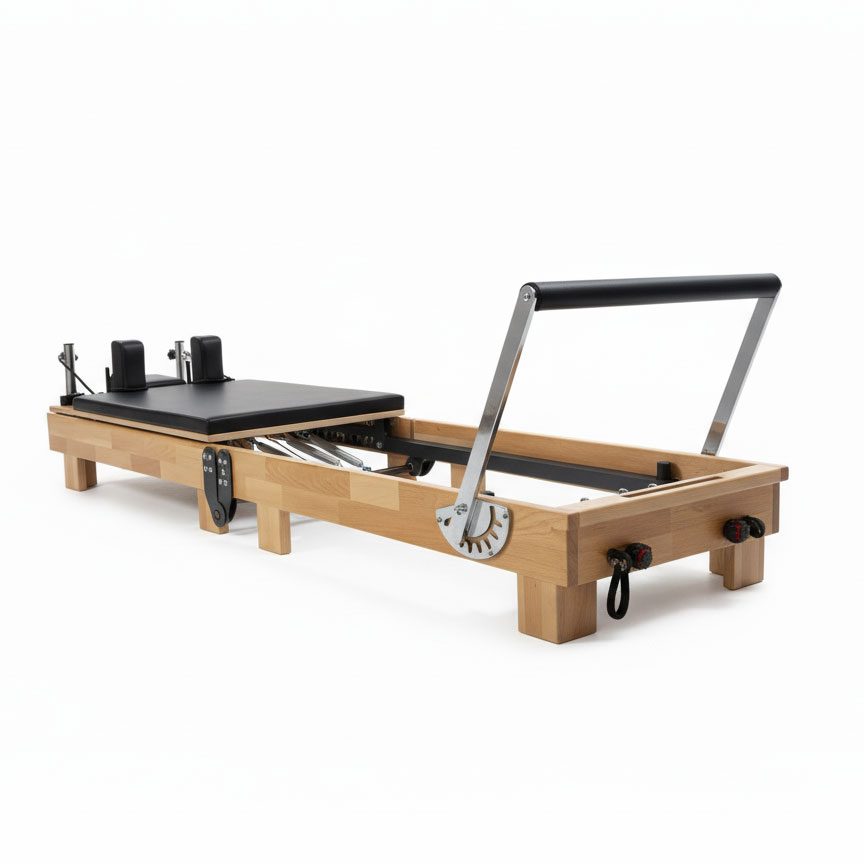
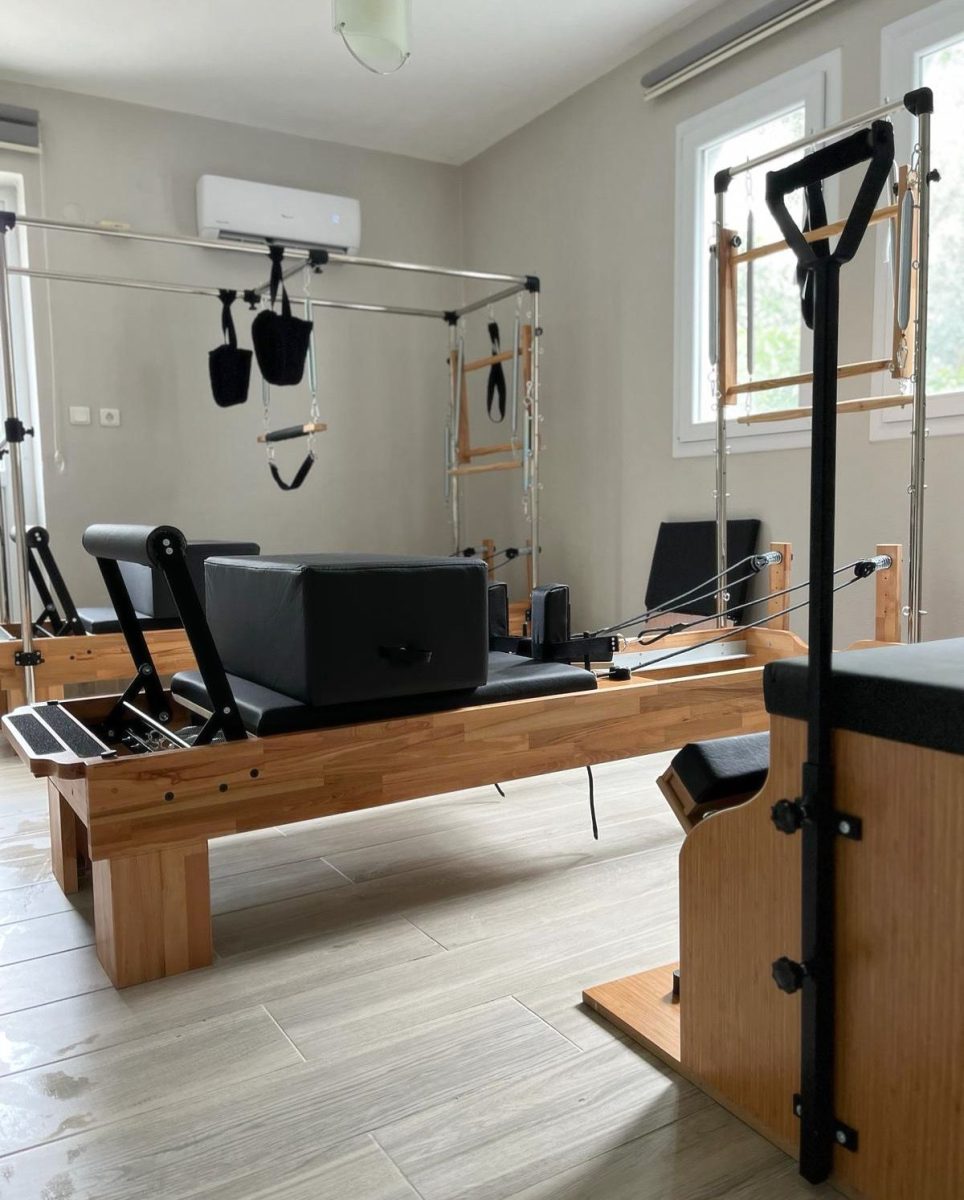
The Reformer consists of a carriage that moves along rails, an adjustable footbar, a spring system, and a strap-and-pulley mechanism. It allows hundreds of exercises in lying, sitting, kneeling and standing positions. The quality of a reformer depends directly on how smoothly the carriage glides, how rigid the frame is, and how consistent the springs are. If you'd like to compare different model options on one page, take a look at our reformer models.
Cadillac and Tower: The Power of Vertical Resistance
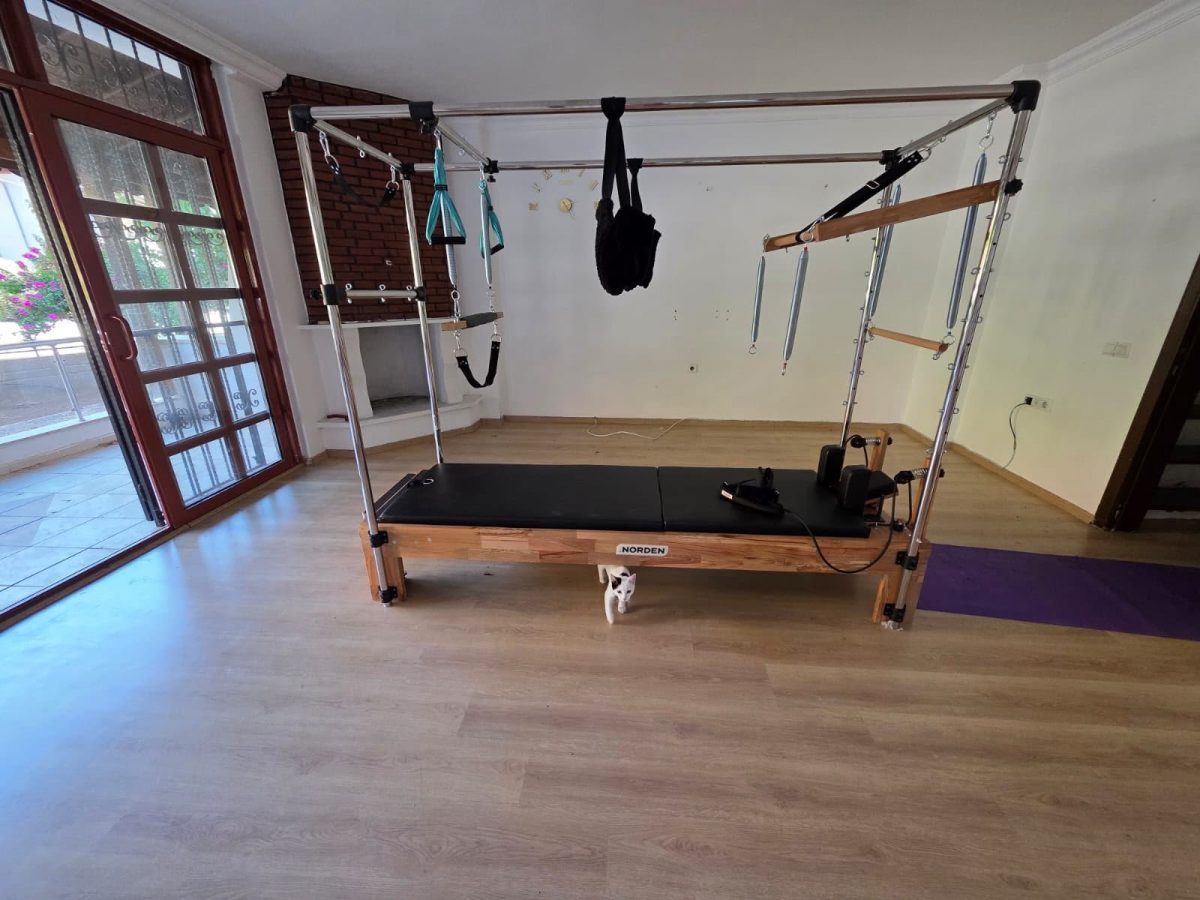
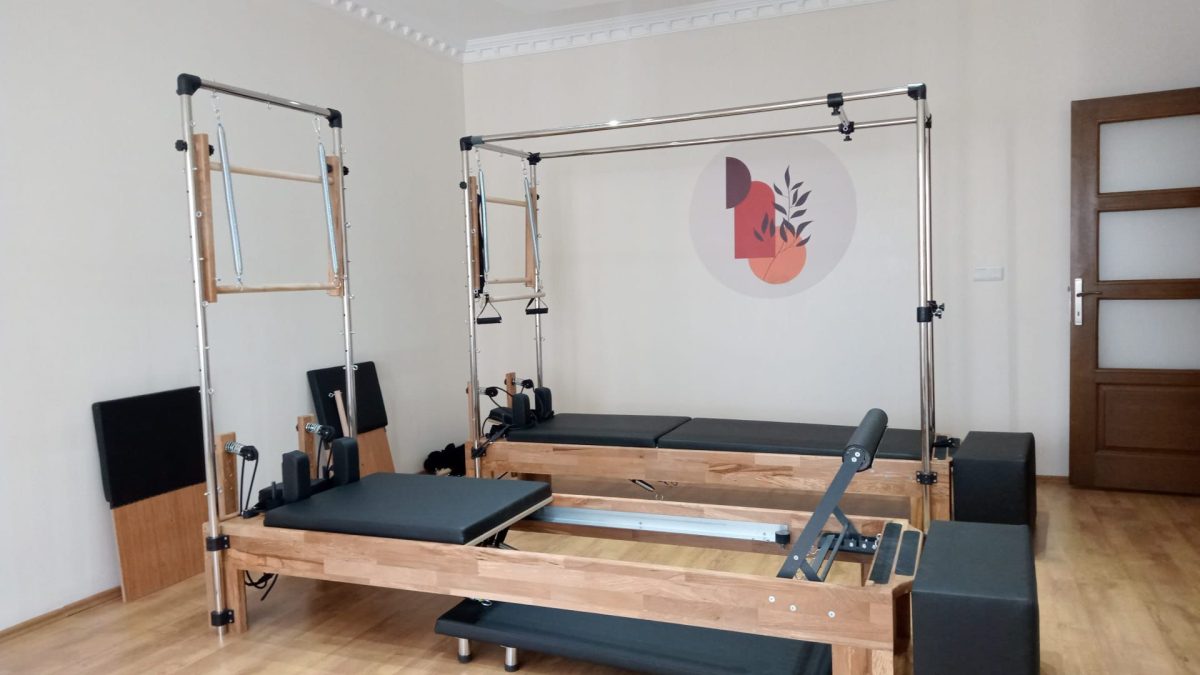
The Cadillac, originally known as the "trapeze table," is a cage-structured piece of equipment with uprights at each corner and a frame on top. Its hanging bars, trapeze, and arm and leg springs allow for spinal articulation, flexibility and strength work. The Tower is essentially the single-sided tower version of this cage system. This distinction is clear in Norden models: the Tower model has a tower on one side, while the Combo Cadillac model has a full cage structure. If you'd like to see the practical differences between the two systems in more detail, check out our article on the differences between Tower and Cadillac reformers.
Box and Jump Board: Accessories That Expand the Repertoire
The sitting box is placed on top of the carriage to allow exercises performed in seated and prone positions. Movements like arm pulls, swan and pulling straps can't be done without the box. The jump board, fitted in place of the footbar, allows low-impact plyometric work. Jumping exercises performed lying down place far less stress on the joints than jumping while standing, while still activating the cardiovascular system. At Norden Reformer, the box and jump board are included with every model, so you won't need to budget for extra accessories.
Chair and Barrel: Other Members of the Classical Repertoire
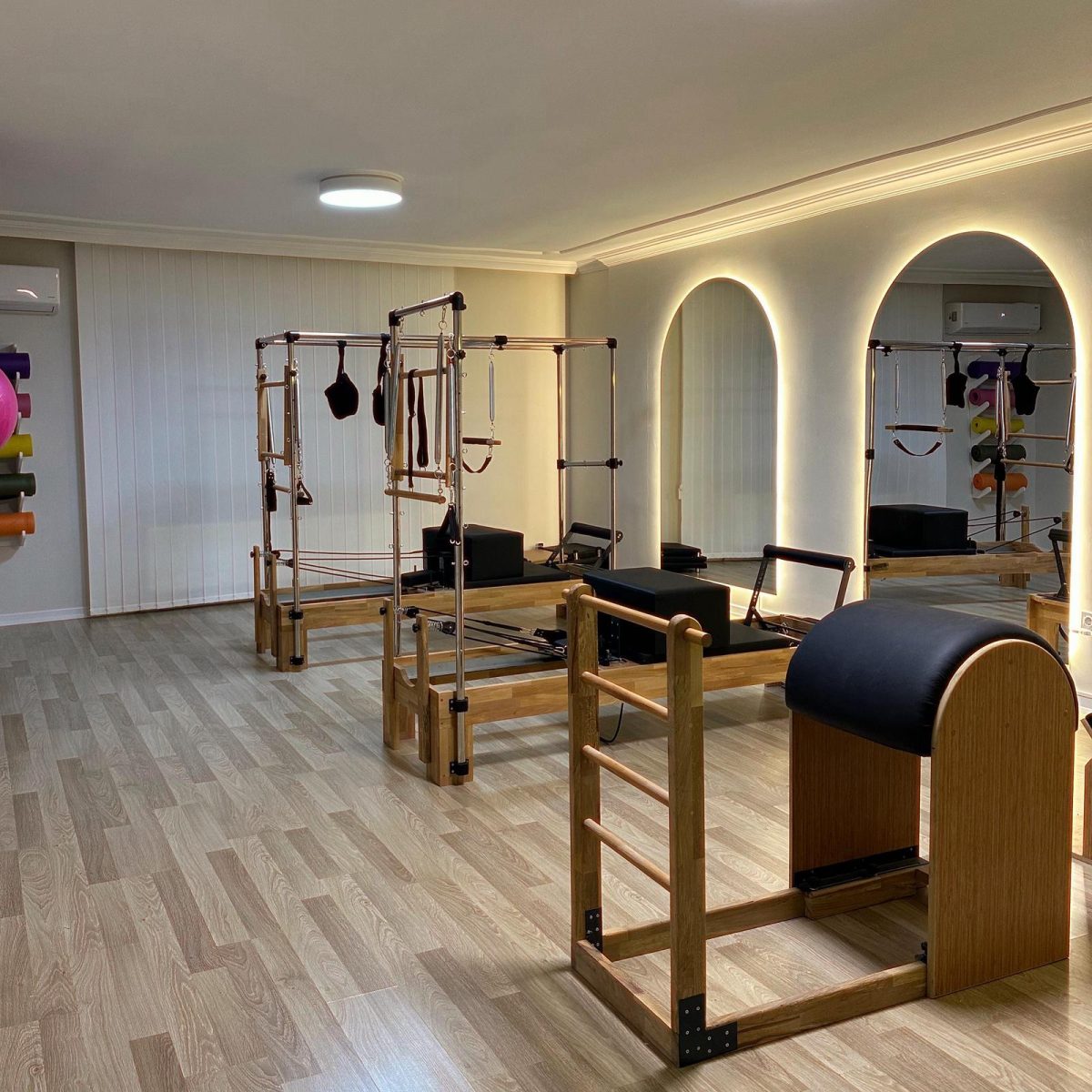
The Wunda chair is a pedal-equipped piece of equipment used for exercises that demand high levels of balance and strength in a small space. The Ladder Barrel and spine corrector are designed to improve the spine's flexion and extension capacity. These items are usually added to the inventory as a studio grows; in an initial investment, the reformer and tower or cage systems should take priority.
The Engineering Details That Determine a Reformer's Quality
Two reformers that look similar from the outside can feel dramatically different in use. This difference comes down to material choice and mechanical design. You can find the criteria for evaluating equipment durability in our guide on how to tell if a reformer is well-built.
Solid Beech Frame and 4-Coat Matte Lacquer
Norden reformer frames are made from grade-1 solid beech. Thanks to its high density and grain structure, beech is one of the most reliable hardwoods in the furniture industry for absorbing impact and vibration. The heavy frame prevents the equipment from rocking, particularly during standing exercises that involve lateral force — which translates directly into client safety. The frame is finished with 4 coats of special matte lacquer. This layered finish stops sweat and moisture, which are unavoidable in a studio environment, from penetrating the wood, preventing swelling and cracking.
8-Wheel, 16-Bearing Carriage System
How smoothly the carriage glides directly affects the quality of an exercise. A carriage that catches, shakes or makes noise disrupts eccentric control and breaks the client's concentration. The 8-wheel, 16-bearing system used in Norden models distributes load across a wide surface, delivering quiet, smooth movement. In a group class where several reformers are running at once, this quietness makes a noticeable difference to the atmosphere of the session.
304 Chrome Steel Tower and a Non-Flexing Structure
It's critical that the material used in tower and cage systems doesn't flex, since the force applied to the hanging bars and springs transfers directly to these uprights. 304 chrome steel is ideal for this role thanks to its high corrosion resistance and structural rigidity. A tower that flexes absorbs part of the spring resistance, making the exercise load unpredictable — which makes clinical dosing effectively impossible.
5-Spring Board, Footbar, Gearbar and Stopper System
Norden reformers feature a 5-spring carriage board in yellow, blue, green, red and black. This colour coding makes it easy for instructors to switch spring combinations quickly without breaking the flow of a class, and for clients to keep track of their own programme. On the mechanical adjustment side, the following components stand out:
- A 4-position footbar lets you adjust foot position according to leg length and exercise angle, personalising the range of motion at the knee and hip.
- A 3-position gearbar changes the carriage's starting point to adjust spring pre-tension, so you can get different load levels from the same spring combination.
- The stopper system prevents the carriage from unexpectedly sliding back, improving safety especially when getting on and off the equipment.
- Antibacterial, grade-1 faux leather upholstery stays hygienic under heavy use and is easy to clean, speeding up the studio's hygiene routine between clients.
- A specially designed headrest and shoulder rests support a neutral cervical spine position and give the shoulder girdle a stable reference point.
Advantages and Disadvantages of Equipment-Based Pilates
Like any method, equipment-based Pilates has clear strengths as well as limitations worth keeping in mind. Weighing these up fairly helps you set realistic expectations, whether you're planning a studio or making a personal decision.
Key Advantages of Equipment-Based Pilates
- Spring resistance allows loads to be adjusted precisely, making the method suitable for everyone from absolute beginners to elite athletes.
- The ability to assist movement lets clients with pain or limited mobility start exercising with confidence.
- Closed kinetic chain exercises and eccentric control support joint stability and tendon health.
- The physical reference points the equipment provides make it easier to spot asymmetries and correct posture.
- Accessories like the jump board and box combine strength, flexibility and cardiovascular training in a single piece of equipment.
- For studio owners, equipment-based classes typically command higher session fees and build stronger client loyalty than mat classes.
Disadvantages and Things to Watch Out For
- The equipment investment is higher than for mat Pilates, which makes choosing the right model critical for long-term cost efficiency.
- Reformers, and cage systems in particular, require a certain amount of floor space, so studio or home layouts need to be planned around accurate measurements.
- Spring-based equipment can carry an injury risk if used incorrectly, so working with a qualified instructor is essential at the start.
- Lower-quality equipment can develop problems over time, such as a wobbling frame, a sticking carriage or spring fatigue — which is exactly why material quality shouldn't be a place to cut corners.
Nearly all of these drawbacks can be managed with the right equipment and proper instruction. Not compromising on material quality, in particular, saves significant money on maintenance and replacement over the years.
Studio Operations and Home Use: Investment, Logistics and Warranty
Choosing equipment isn't just a technical decision — it's also a business and budget decision. For a physiotherapist setting up a new studio, the equipment's payback period, delivery schedule and warranty coverage matter just as much as its technical specifications.
Pricing and Ease of Purchase
Norden Reformer pricing is transparent — see the current price for the Basic Reformer, Tower Reformer and Combo Cadillac Reformer on the product page. Since the box and jump board are included with every model, you don't need to set aside a separate accessories budget. Delivery, taxes and duties are included in the price, and machines ship fully assembled, so there are no surprise costs at checkout. When planning your studio, keep in mind that the price difference between the Tower and the Basic is relatively small, while the variety the tower adds to your repertoire is considerable.
Space Planning and Dimensions
Frame dimensions are 69×240×40 cm across all models, and the tower measures 79×190 cm. When laying out your studio, leave enough space around each reformer for the instructor to move around comfortably and for clients to get on and off safely. For models with a tower or cage, factor in ceiling height so that standing arm movements aren't restricted. If you're setting one up at home, measuring the doorway width and hallway turns in advance will save you any surprises during delivery.
Production, Delivery and Assembly
Once ordered, equipment is produced within 9 business days. Delivery, taxes and duties are included in the price, and the machine arrives fully assembled at your door. Setup is straightforward, since the carriage bed arrives pre-assembled. For Tower and Cadillac models, you only need to attach and tighten the tower to the bed, and video support is provided throughout the process.
Warranty Coverage and Suitability for Heavy Use
In a studio, a reformer may be used for eight to ten sessions a day. This intensity puts every part of the equipment through constant fatigue cycles. Norden models are designed with this usage pattern in mind and come with a 2-year parts warranty. The solid beech frame, 304 chrome steel tower and 16-bearing carriage system make them fully suited to intensive studio use. For home users, this means the equipment will keep performing like new for many years, even with just a few sessions a week. When weighing up your investment, look beyond the purchase price to the cost per session over the equipment's lifetime. A well-built reformer's cost per session drops below that of cheaper alternatives within a few years, since maintenance, part replacement and early upgrades are kept to a minimum.
Practical Principles for Getting Started with Equipment-Based Pilates
Choosing the right equipment is only half the process — using it correctly is the other half. Whether you're planning a client's first session in your studio or building your own home programme, the principles below will help you get off to a safe, effective start.
Spring Selection and Progressive Loading
A common mistake beginners make is assuming more springs always means better results. In equipment-based Pilates, a heavier spring doesn't always mean a harder exercise. For example, in some core exercises that rely on carriage stability, a lighter spring actually makes the movement much harder, because the stabilising work falls entirely on your own muscles. The healthiest approach is to start with moderate resistance combinations in the first few weeks, establish good movement quality, and then increase the load. The colour-coded spring system makes it easy to track your progress session by session by noting the combinations you use.
Breath, Alignment and Movement Quality
In equipment-based Pilates, the number of repetitions matters far less than the quality of the movement. Before starting any exercise, bring your pelvis to neutral, make sure your shoulders sit evenly on the shoulder rests, and check that your feet are symmetrical on the footbar. Matching your breath to the rhythm of the movement — generally exhaling during the effort phase — supports activation of the deep core muscles. Always bring the carriage back under control, and never let the springs slam into their starting point. A quiet carriage is a sign of a well-controlled movement.
Class Planning for Studios
For instructors setting up a new studio, getting the class format right in the first few months has a direct impact on client loyalty. Private and duet sessions are ideal for rehab-focused clients, and cage systems like the Cadillac offer maximum clinical flexibility for these sessions. In small group classes, positioning identical reformer models side by side makes it easier for the instructor to give the same spring and setting instructions to the whole group. The importance of a smooth, quiet carriage system shows up again here, since noise and vibration directly affect group dynamics and focus.
Frequently Asked Questions
Is equipment-based Pilates more effective than mat Pilates?
Both methods are built on the same principles and are effective when done correctly. What sets equipment-based Pilates apart is that spring resistance lets the load be precisely tailored to the individual, and the equipment can both assist and challenge a movement. This makes equipment-based Pilates particularly valuable for rehabilitation, clients in pain, and anyone focused on building strength. Mat Pilates, meanwhile, is an excellent complement for developing body awareness and training without equipment.
What equipment is used in equipment-based Pilates?
The reformer is the core piece of equipment in equipment-based Pilates. Alongside it, classical equipment such as the Cadillac, Tower, Wunda chair, Ladder Barrel and spine corrector are also used. The box and jump board are accessories that expand the reformer repertoire. In Norden Reformer models, the box and jump board are included with every set. The Tower model has a tower on one side, the Combo Cadillac has a full cage, while the Basic and foldable models don't include a tower or cage.
Is a reformer suitable for home use?
Yes — with enough space and some basic instruction, a reformer can be used comfortably at home. Given the 69×240×40 cm frame dimensions, a room that allows safe movement around the equipment is sufficient. Doing your first few sessions with an instructor builds a safe foundation for spring selection and proper alignment. If space is limited, foldable models are worth considering.
What's the main difference between the Tower and Cadillac reformer?
The only structural difference between the two models is the tower layout. The Tower Reformer has a tower positioned on one side only, with a 79×190 cm, 304 chrome steel structure that offers extra spring and bar options. The Combo Cadillac Reformer has a full cage structure, providing access to the complete range of strap, trapeze and spring combinations. The frame material, carriage system, spring board and set contents are identical across both models.
How is a reformer delivered, and is it hard to assemble?
Equipment is produced within 9 business days and delivered to your door fully assembled, with delivery, taxes and duties included in the price. The carriage bed arrives pre-assembled; for Tower and Cadillac models, you simply need to attach and tighten the tower to the bed. This step is very straightforward, and video support is provided throughout.
What's the warranty on equipment-based Pilates equipment?
Norden Reformer models come with a 2-year parts warranty. Thanks to the solid beech frame, 4-coat matte lacquer, 304 chrome steel tower and 8-wheel, 16-bearing carriage system, the equipment is fully suited to intensive studio use.
Final Thoughts: Start Equipment-Based Pilates with the Right Equipment
Equipment-based Pilates combines Joseph Pilates' rehabilitation-focused vision with spring resistance, creating a scientifically grounded method that adapts to every level. While it shares the same principles as mat Pilates, adjustable load, assisted movement and the physical feedback the equipment provides let you reach clinical and performance goals with much greater precision. The reformer, central among Pilates equipment, becomes an even stronger investment when combined with Tower and Cadillac systems, expanding both your studio's repertoire and its client base.
When choosing equipment, look beyond appearances. Frame rigidity, carriage smoothness, tower stiffness and spring consistency all determine client safety and the equipment's lifespan. A grade-1 solid beech frame, 4-coat matte lacquer, 304 chrome steel tower, 8-wheel 16-bearing carriage and 5-colour spring system together represent an engineering approach that meets every one of these criteria. If you're a physiotherapist setting up a new studio, consider the Tower or Combo Cadillac for clinical flexibility; if you're an individual training regularly at home, the Basic model, with its sturdy build and complete set contents, is a strong choice. Whichever model you choose, the box and jump board will be included in the set, the equipment will arrive at your door fully assembled with delivery, taxes and duties included, and it will be backed by a 2-year parts warranty. Taking the first step with the right equipment lays the foundation for years of healthy movement practice.


