


Pilates equipment consists of specialised exercise machines that both support and challenge the body through spring resistance, carriage mechanisms and supportive surfaces. The Reformer, Cadillac, Pilates Chair and Barrel are the four core members of this family. Each serves a different biomechanical purpose, and choosing correctly has a direct impact on the efficiency of a studio or a home workout. The table below compares Norden Reformer models side by side from a technical standpoint, giving you a solid basis for your decision.
| Technical Feature | Basic Reformer | Tower Reformer | Combo Cadillac Reformer |
|---|---|---|---|
| Tower / Frame Structure | None | Tower on one side | Full frame |
| Frame Material | Grade-1 solid beech, 4-coat matte lacquer | Grade-1 solid beech, 4-coat matte lacquer | Grade-1 solid beech, 4-coat matte lacquer |
| Tower Construction | Not applicable | 304 Chrome Steel | 304 Chrome Steel |
| Resistance System | 5 springs (yellow, blue, green, red, black) | 5 springs (yellow, blue, green, red, black) | 5 springs (yellow, blue, green, red, black) |
| Wheels / Bearings | 8 wheels / 16 bearings | 8 wheels / 16 bearings | 8 wheels / 16 bearings |
| Footbar / Gearbar | 4 positions / 3 positions + stopper | 4 positions / 3 positions + stopper | 4 positions / 3 positions + stopper |
| Box and Jump Board | Included | Included | Included |
| Price | See the current price on the product page | See the current price on the product page | See the current price on the product page |
Decision Summary (Which model is right for you?)
- If your studio is focused mainly on group classes and you need to make the most of every square metre, the Basic Reformer gets you to a professional standard with the lowest investment.
- If you want to add spring-loaded arm and leg work, roll-down bar and push-through bar variations to your reformer sessions, the Tower Reformer, with its single-sided tower, is the ideal middle ground.
- If you're a physiotherapist focused on rehabilitation who needs to work with clients in suspended, side-lying or fully supported positions, the Combo Cadillac Reformer's full frame offers the widest clinical repertoire.
- If you have limited space at home and want to put the machine away after use, a model without a tower or frame — the Foldable Reformer — is the right starting point for you.
What Is Pilates Equipment and Why Does It Use Spring Resistance?
Pilates equipment is the mechanical extension of the "Contrology" system Joseph Pilates developed in the early 20th century. Mat exercises performed using body weight alone can be too difficult for a beginner and insufficient for an advanced athlete. The equipment was designed to bridge that gap. A combination of springs, pulleys and a sliding carriage makes it possible to make the same movement either easier or harder.
The Biomechanical Logic of Spring Resistance
With free weights, resistance is constant — a dumbbell's mass is the same at every point of the movement. With a spring, however, resistance increases in proportion to how far it stretches, according to Hooke's law. This creates a special loading profile known as variable resistance. The muscle experiences low load at the start of the movement and high load at the end. Even more critical is the return phase: as the spring pulls the carriage back, you must control the movement slowly, which brings eccentric control — where the muscle lengthens while contracting — into play. Eccentric training is one of the loading types most recommended in clinical literature for tendon health, joint stability and injury prevention.
The Balance Between Closed and Open Kinetic Chains
In a reformer exercise where the feet are fixed on the footbar, the legs work in a closed kinetic chain. This position applies balanced compression to the knee and hip joints and is frequently used in ACL rehabilitation. In movements where the feet move freely in the straps, the work shifts to an open kinetic chain, increasing isolated muscle control. Well-designed Pilates machines let you switch between these two chain types within seconds on a single platform — a flexibility that is the fundamental difference between equipment-based Pilates and mat Pilates.
Types and Names of Pilates Machines
Pilates equipment is generally divided into two groups: large apparatus and accessory equipment. Large apparatus forms the backbone of a studio, while accessory equipment expands the exercise repertoire. The table below compares the four main pieces of apparatus by function and use case.
| Apparatus | Core Function | Main Use Case | Space Requirement |
|---|---|---|---|
| Reformer | Full-body training via sliding carriage and spring resistance | Group classes, strengthening, rehabilitation | Medium / High |
| Cadillac | Frame and multi-spring attachments over a fixed platform | Clinical rehabilitation, one-on-one sessions | High |
| Pilates Chair | Pedal-based, vertical loading | Balance, lower-body strength, advanced work | Low |
| Barrel | Spinal mobility over a curved surface | Flexibility, posture correction | Low / Medium |
Core Apparatus and How They Share the Workload
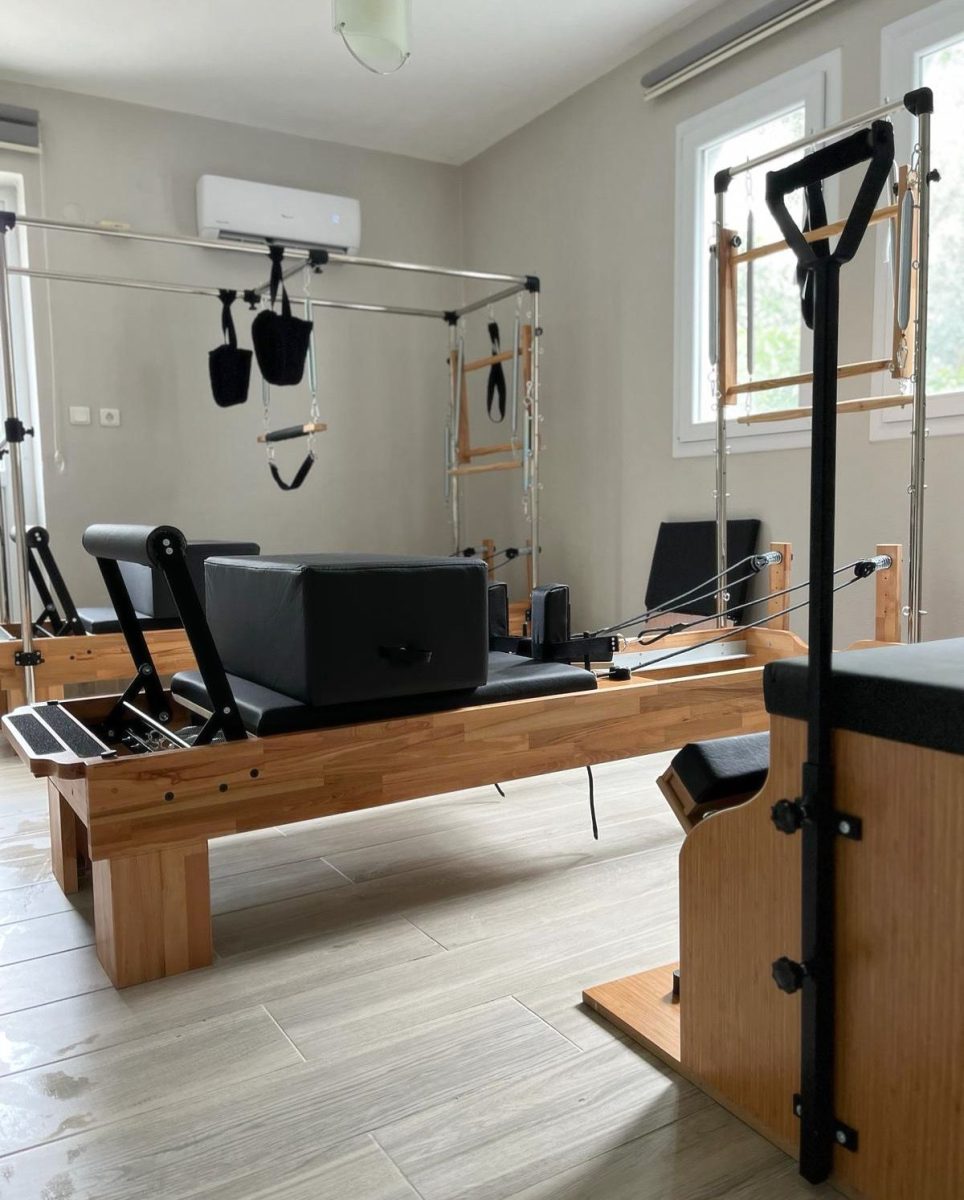
The Reformer stands out as the most popular piece of Pilates equipment in studios, since it suits both beginners and professional athletes. The Cadillac is used more in clinical settings, while the Chair and Barrel function as complementary apparatus. If you're setting up a new studio, the most sensible strategy is to put most of your equipment budget into reformers and add the other apparatus based on demand. For a step-by-step plan, our guide on the equipment list and start-up costs for opening a Pilates studio gives you a clear roadmap.
The Hidden Power of Accessory Equipment
The Box and jump board are two critical accessories that nearly double a reformer's functionality. The Box sits on the carriage, enabling prone, seated or side-lying work. The jump board attaches in place of the footbar and enables plyometric training with minimal joint load. The Box and jump board are included with every Norden Reformer model, so you get a complete set of equipment without any extra purchase.
The Reformer: The Most Versatile of All Pilates Equipment
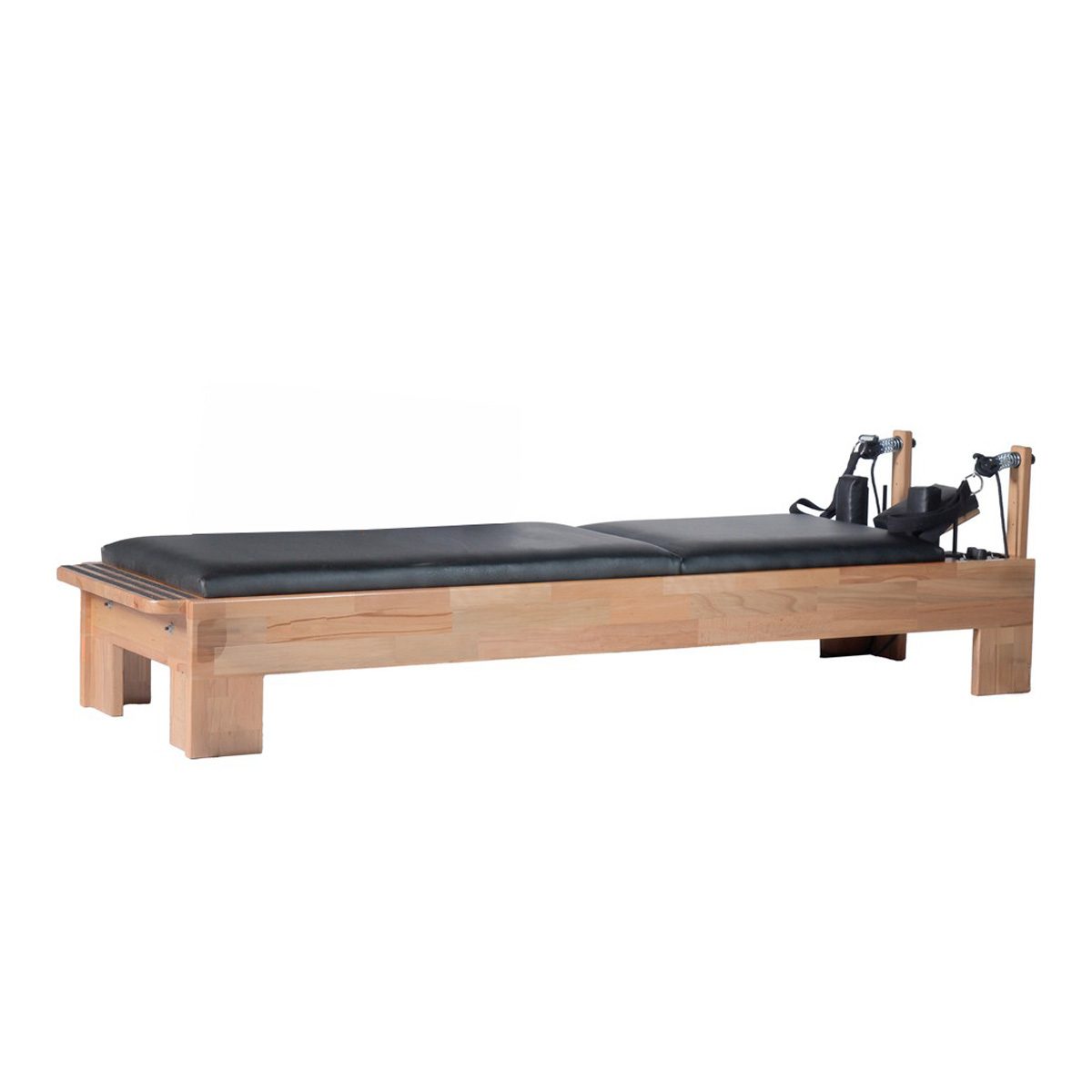
A Reformer consists of a carriage that moves along rails, a footbar for the feet or hands, a gearbar that adjusts spring resistance, shoulder rests and a strap system. This seemingly simple structure, combined with sound engineering, brings together hundreds of exercises on a single platform. To explore our different models in detail, take a look at our Reformer models.
Reformer Anatomy and Mechanical Details
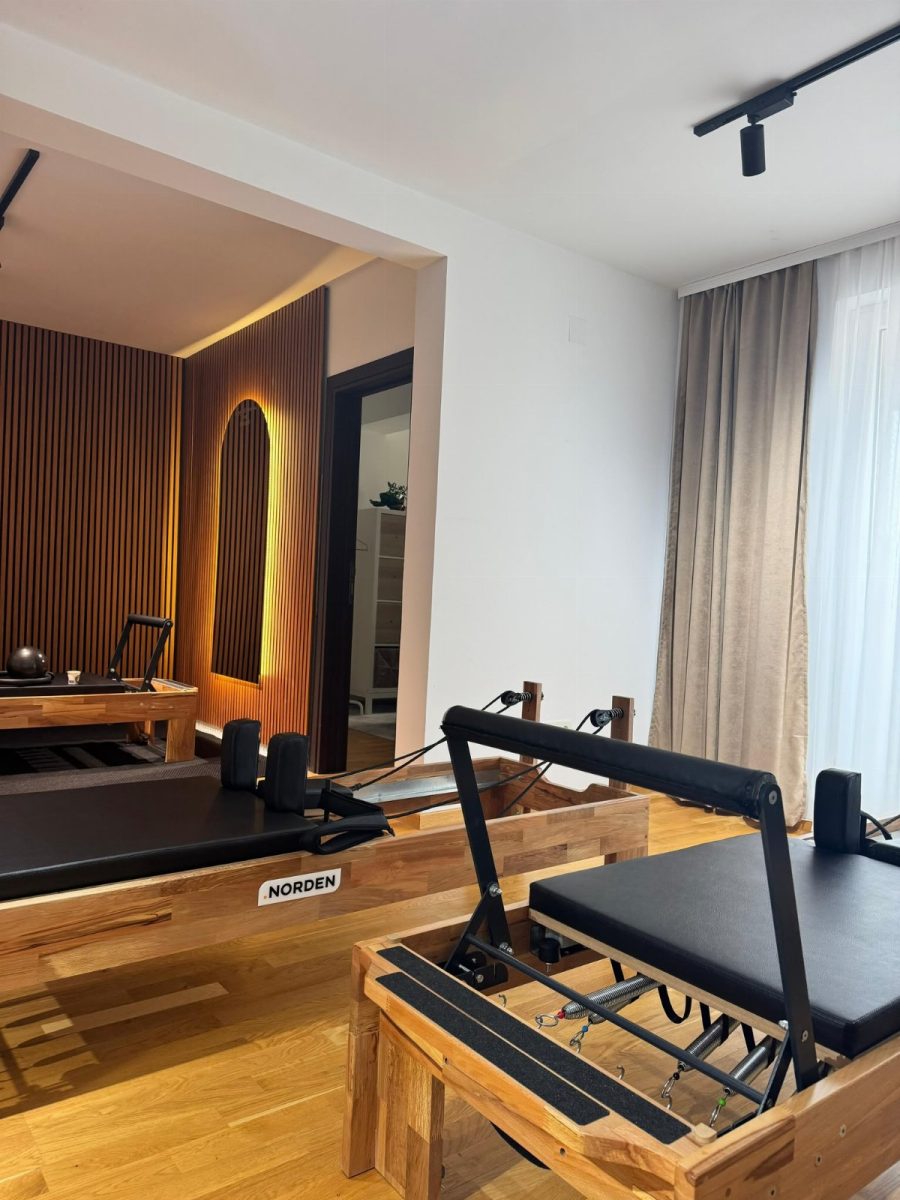
The smoothness of the carriage is the first criterion that determines a reformer's quality. The 8-wheel, 16-bearing system used in Norden reformers ensures the carriage glides smoothly and quietly. A higher bearing count distributes load across more contact points, reducing wear and delivering vibration-free movement even for heavier users. The 4-position footbar accommodates different leg lengths and exercise angles, while the 3-position gearbar changes the starting tension of the springs, letting you achieve different intensities with the same spring combination. The stopper system prevents the carriage from snapping back uncontrolled, adding a safety margin.
On the resistance side, there are five springs, each distinguished by a colour code. As an instructor, this colour system makes it easy to give clear, fast instructions during class. A light spring combination challenges stabilising muscles, while heavier combinations target larger muscle groups. One point that's often overlooked: a light spring doesn't always mean an easy exercise. In movements like plank or knee stretch, for example, a light spring makes the carriage easier to escape, demanding far more control from the core muscles.
Who Is the Basic Reformer and the Foldable Model Suited To?
The Basic Reformer, which has no tower or frame, delivers the highest efficiency for studios focused on group classes. Lined up side by side, it maximises room capacity while fully covering the entire core reformer repertoire. For home users, the folding design offers a distinct advantage. The Norden Core home-use Foldable Reformer, which can be stored upright after use, lets you enjoy a professional training experience without permanently taking up space in your living room.
Cadillac and Tower: The Clinical Depth of the Tower System
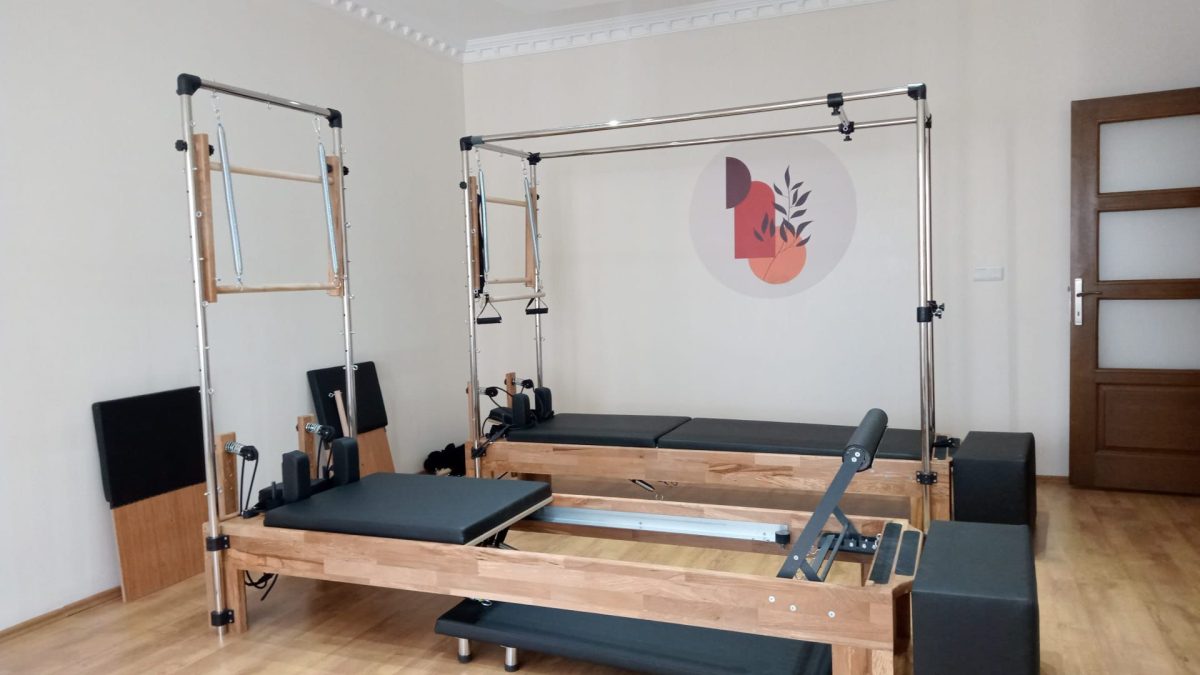
The Cadillac, originally called the "Trapeze Table", consists of a raised, fixed platform surrounded by a steel frame. The push-through bar, roll-down bar, trapeze and numerous springs attached to the frame let you work a client in almost any position. The Combo Cadillac Reformer combines this frame structure with a reformer body, bringing two pieces of apparatus together in one machine.
The One Difference Between the Cadillac and the Tower
These two models are often confused, but the distinction is very clear. On the Tower Reformer, the tower sits only on one side — a vertical frame at the head end of the reformer. On the Cadillac, the structure is a full frame that surrounds the entire platform. The Tower is ideal for studios that want to add tower exercises to their reformer work while being mindful of space. The Cadillac is designed for suspended work, trapeze-supported inversions and clinical applications that require versatile spring attachments. If you're setting up a physiotherapy centre, the Combo Cadillac Reformer gives you the widest treatment range.
The Importance of 304 Chrome Steel Construction
Tower and frame systems are exposed to lateral and vertical loads during exercise. If the frame flexes even slightly as a client pushes against the push-through bar or hangs from the trapeze, both their confidence and the accuracy of the exercise suffer. The grade-304 chrome steel used in Norden towers eliminates this issue with high corrosion resistance and a rigid structure. 304 stainless steel is an alloy favoured in the medical and food industries. In a studio environment with constant exposure to sweat and moisture, it keeps its original shine and strength for years.
Pilates Chair: A Big Challenge in a Small Space
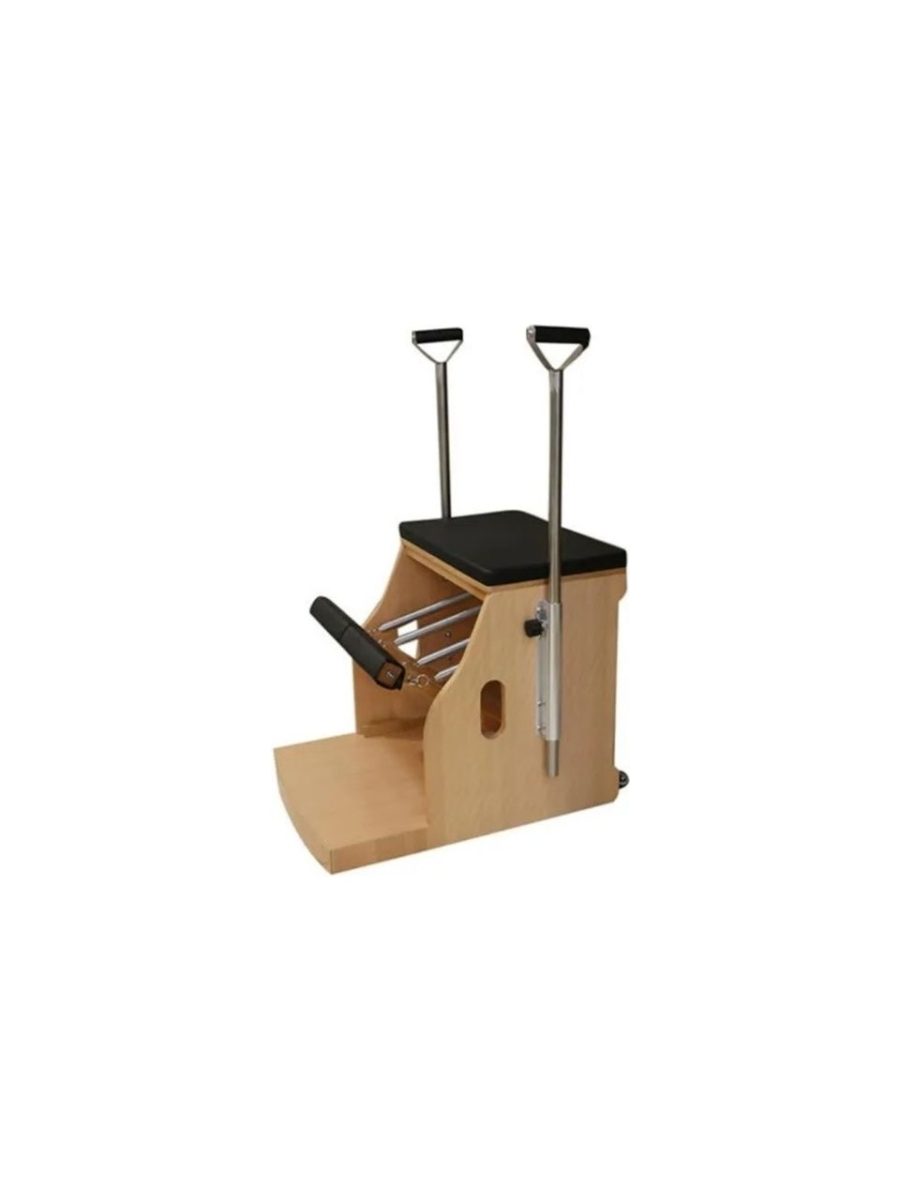
The Pilates Chair is a compact but highly challenging piece of apparatus that Joseph Pilates originally designed for students living in small apartments. It's also known as the "Wunda Chair" or "Combo Chair". It consists of a box-shaped seat and a spring-loaded pedal.
Structure and Working Principle
The Chair's key distinction is that loading happens largely on the vertical plane. A leg-press movement you'd perform lying on your back on a reformer becomes a very different exercise when performed standing or seated on the Chair, where gravity comes directly into play. Because the support surface is small, balance and proprioception (joint-position awareness) are challenged far more intensely. For this reason, the Chair is generally recommended for intermediate and advanced clients.
What Goals Does It Serve?
Work on the Chair specifically targets the following benefits:
- Single-leg pedal presses strengthen the hip abductors and knee stabilisation, building a functional foundation for runners and athletes.
- Movements performed by pressing the pedal with the hands develop shoulder-girdle stability and scapular control.
- Standing exercises directly mimic everyday functional movement patterns such as climbing stairs or standing up from a seated position.
Barrel: The Curved Ally of Spinal Health
The Barrel is a piece of Pilates apparatus that uses its curved surface to support and stretch the spine along its natural curves. It's extremely valuable for clients who spend long hours at a desk, have a tendency toward kyphosis, or have restricted rib-cage mobility.
The Ladder Barrel and Its Uses
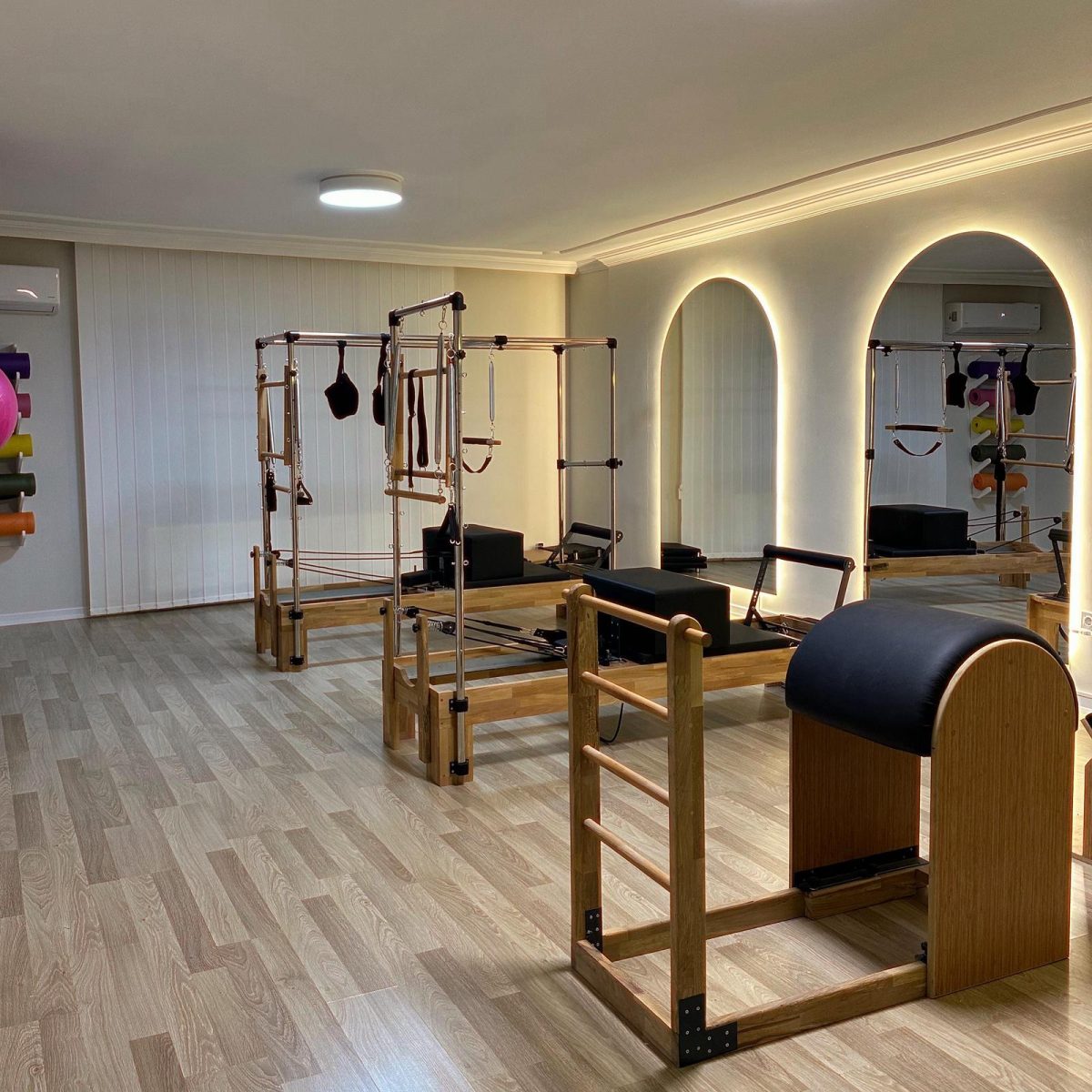
The Ladder Barrel combines a ladder with a large curved body. The feet are secured on the ladder rungs while the torso extends or laterally flexes over the barrel. This structure provides controlled mobility across all segments of the spine. Hamstring stretches, side bends and strengthening of the back extensors are among its most common applications.
Spine Corrector and Arc Variations
The smaller Spine Corrector and Arc models are portable versions of the barrel that can be used on the mat. They're particularly practical for work targeting thoracic spine extension. They're also a convenient complementary option for home users, since they're easy to store.
Materials Science: What Makes a Piece of Pilates Equipment Last?
Pilates equipment is used under continuous load in a studio for 8 to 10 sessions a day. For this reason, choosing the right materials isn't just an aesthetic decision — it's a matter of safety and return on investment.
Solid Beech and 4-Coat Matte Lacquer
Grade-1 solid beech is used in the frame of Norden reformers. Beech's high density and homogeneous grain structure give it excellent resistance to bending and impact. A heavy frame keeps the machine firmly in place during dynamic movements. A reformer that doesn't rock lets clients focus on the quality of their movement rather than on maintaining their balance. The 4-coat specialist matte lacquer applied to the frame creates a protective barrier against sweat and moisture, preventing the wood from absorbing water, swelling, cracking or discolouring. The matte surface also doesn't reflect studio lighting and resists fingerprints.
Antibacterial Upholstery and Ergonomic Supports
All upholstered surfaces — the carriage, box and shoulder rests — use Grade-1 antibacterial faux leather. Hygiene is critical in a studio used by different clients back to back. The antibacterial surface is easy to clean with disinfectant and, having no porous structure, doesn't harbour bacteria. The specially designed headrest and fixed ergonomic shoulder rests help keep the cervical spine in a neutral position and reduce unnecessary tension in the neck.
Choosing Pilates Equipment from a Studio Business Perspective
As a physiotherapist or instructor setting up a studio, your choice of equipment should be guided not just by technical specifications but also by space planning, cost and operational workflow.
Space Planning and Dimensions
Norden reformers have a frame footprint of 69×240×40 cm and a tower footprint of 79×190 cm. At roughly 250 kg (volumetric weight) per unit, they offer a sturdy, stable structure. When planning your room layout, leave enough space around each machine for the instructor to move freely and for the client to extend their arms to the side. As a practical rule of thumb, allowing at least 60–80 cm between machines is ideal for both safety and class flow. For Tower and Cadillac models, don't forget to factor in ceiling height given the tower's additional vertical reach.
Investment Cost and Return
Pricing for the Basic Reformer, Tower Reformer and Combo Cadillac Reformer can be found on the product pages, and the difference between models is relatively small. If you're planning one-on-one clinical sessions in your studio, placing at least one Cadillac in a corner of your space can add serious value to your session pricing. Flexible payment options may be available at checkout to help ease your initial cash flow — check the product page for current terms.
Production, Delivery, Installation and Warranty
Once your order is placed, the machine is produced within 9 business days. Delivery, taxes and duties are included in the price, and machines ship fully assembled to your door. For more details, see our shipping and delivery information. The platform arrives fully assembled; only the tower needs to be attached and tightened onto the bed. The process is very simple and can be completed in minutes with video guidance. All models come with a 2-year parts warranty and are built to withstand heavy studio use.
Advantages and Disadvantages of Pilates Equipment
Like any equipment, Pilates apparatus has both strengths and limitations. An honest look at both sides helps you make an informed decision.
Advantages
- Spring resistance allows loading to be tailored to the individual, making the same machine suitable for both a patient in rehabilitation and a professional athlete.
- The sliding carriage and supportive surfaces reduce compressive load on the joints, creating a safe training environment for people with knee or lower-back issues.
- Movements that require eccentric control activate deep stabilising muscles, improving posture and core strength.
- With accessories like the Box and jump board, hundreds of different exercises can be performed on a single machine.
Disadvantages and Considerations
- Large apparatus, especially the Cadillac and Tower, requires a fixed amount of space, which can make layout planning challenging in smaller homes.
- The initial investment is higher than mat Pilates, though durable materials spread that cost over many years of use.
- Choosing the wrong spring or using incorrect technique can increase the risk of injury, so beginners should always work under the guidance of an instructor or physiotherapist.
Frequently Asked Questions
Which piece of Pilates equipment is best for beginners?
The Reformer is the best piece of Pilates equipment for beginners. The sliding carriage and adjustable spring resistance support the movement, making it easier to learn correct technique. The Chair and Barrel require more balance and control, so they're usually introduced once the basics are in place.
What's the difference between the Cadillac and the Tower Reformer?
The only difference is the tower structure. On the Tower Reformer, the tower sits on just one side, while on the Cadillac a full frame surrounds the entire platform. The Cadillac offers a broader exercise repertoire, while the Tower takes up less space.
What do the spring colours on a reformer mean?
Spring colours indicate resistance level. Norden reformers include five springs — yellow, blue, green, red and black — which can be used alone or in combination to fine-tune exercise intensity.
Can Pilates equipment be used at home?
Yes. If space is limited, a Foldable Reformer with no tower or frame is the most practical solution. If you can dedicate a permanent corner, the Basic Reformer is also a strong choice for home use. Taking your first sessions with an instructor will help you build correct technique with confidence.
Does a Reformer require installation?
Norden reformers arrive with the platform fully assembled. The Basic model requires no further assembly. For the Tower and Cadillac models, only the tower needs to be attached and tightened onto the platform, and this can be easily completed with video guidance.
Overall Assessment: Choosing the Right Pilates Equipment
Final Advice for Studio Owners
If you're setting up a studio, shape your equipment plan around your client profile. For a business focused on group classes, the Basic Reformer maximises your room capacity, while adding one or two Tower or Combo Cadillac Reformers lets you expand into one-on-one sessions and rehabilitation. Bringing in complementary apparatus like the Chair and Barrel as client demand grows helps you use your capital more efficiently.
Final Advice for Home Users
If you'll be training at home, space and ease of use should be your priority. The Foldable Reformer offers a practical solution for limited space, while the Basic Reformer delivers a studio-quality experience if you can set aside a permanent corner. Whichever model you choose, a solid beech frame, a smooth 16-bearing carriage, and an included Box and jump board mean you'll have equipment you can rely on for years to come.
When chosen correctly, Pilates equipment isn't just exercise apparatus — it redefines your relationship with your own body. Taken together, the versatility of the Reformer, the clinical depth of the Cadillac, the functional challenge of the Chair and the spine-focused approach of the Barrel mean there's a solution for every goal. Clarify your needs, measure your space, plan your investment, and start your training journey with equipment built for quality movement.


